

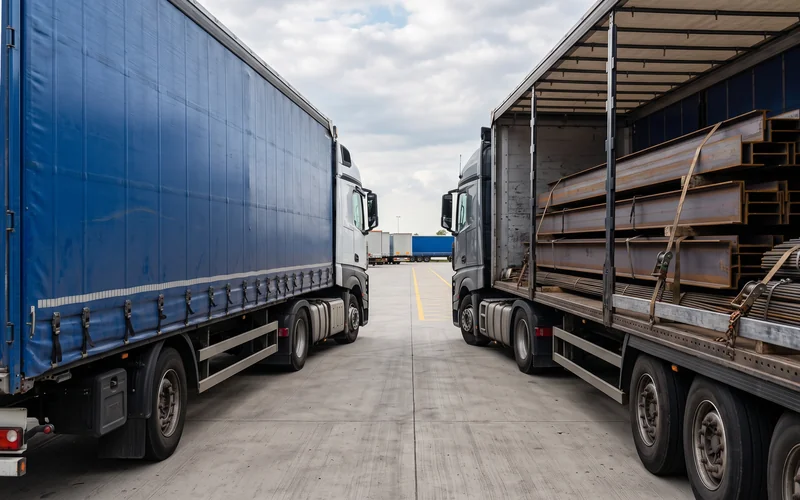
Curtainside vs flatbed trailer comparison: which to choose
When planning heavy road haulage, a detailed curtainside vs flatbed trailer comparison is essential for selecting the right equipment, minimizing costs, and safeguarding cargo integrity. Commercial freight transport across regional highways and international corridors relies heavily on specialized articulated vehicles. Semi-trailers deployed in heavy transport generally fall into two dominant configurations: enclosed weather-resistant curtainsiders and open-deck flatbed trailers. Understanding how each platform performs in terms of loading access, payload capacity, and road safety ensures streamlined supply chain operations. As standard semi-trailers represent the primary workhorse of road transport, choosing the right specification directly impacts logistics performance.
Curtainside vs flatbed trailer comparison: Structural Differences
The core structural engineering of a trailer dictates its payload versatility and operational boundaries. Evaluating chassis geometry and deck configurations reveals the distinct advantages of both equipment types.
Curtainsider (Tautliner / Euro-tent) Dimensions and Volume
Standard European curtainsider trailers measure 13.6 meters in external length, 2.45 meters in internal clear width, and 2.70 meters in cargo height. This internal configuration delivers a total usable volume of 86 to 92 cubic meters, perfectly accommodating 33 standard Euro-pallets (1200×800 mm) arranged side by side. For high-cube logistics, mega curtainsiders feature low-profile chassis and internal heights of up to 3.0 meters, expanding capacity to 100–105 cubic meters. Curtains are manufactured from durable PVC-coated polyester fabric (650–900 g/m²) mounted on sliding rollers for rapid lateral retraction.
Flatbed Platform Specifications and Load-Bearing Design
Flatbed trailers feature an open deck platform measuring 13.6 meters in length and 2.48 to 2.50 meters in width, free of permanent side walls, roof trusses, or vertical pillars. Built upon high-tensile steel I-beams, flatbed decks are layered with heavy-duty hardwood flooring or checkered steel plating engineered to withstand intense concentrated loads. Many open flatbeds come equipped with fold-down dropsides, removable steel stanchions (stakes) for retaining cylindrical freight, and twist-locks designed to anchor ISO shipping containers securely.
Tare Weight Advantages and Axle Load Distribution
On Azerbaijani arterial highways (such as the M1 to the north and M2 to the west), the statutory maximum gross vehicle weight for five-axle combinations is capped at 38 to 40 metric tons. Because open flatbeds lack heavy roof lifting structures, side curtains, and rear container doors, their unladen tare weight is typically 1.0 to 1.5 metric tons lighter than comparable curtainsiders. This structural difference translates directly into a higher legal payload margin (up to 23–25 tons) without exceeding statutory axle limits.
Loading and Unloading Dynamics: Crane vs Forklift Handling
From an operational loading standpoint, conducting a curtainside vs flatbed trailer comparison highlights fundamental contrasts in crane access and turnaround times. Facilities must align trailer selection with their available handling machinery.
Overhead Crane Access on Open Flatbed Decks
Open flatbeds excel when loading requires overhead gantry cranes, boom cranes, or shop hoists. With no overhead frame or roof beams obstructing vertical access, industrial components, precast concrete slabs, and heavy steel girders can be positioned directly onto the deck from above. Ground crews enjoy 360-degree unobstructed visibility during rigging operations, drastically cutting positioning time. While modern curtainsiders often feature sliding roof tarpaulins, retracting the roof rail system requires manual intervention and additional turnaround time.
Lateral and Rear Dock Loading for Palletized Cargo
In high-throughput distribution hubs, such as the Alat Free Economic Zone or Baku logistics terminals, curtainsider trailers provide unmatched loading efficiency. Backing up to hydraulic dock levelers allows pallet jacks and forklifts to drive straight into the trailer through reinforced rear barn doors. Alternatively, warehouse operators can draw back both side curtains simultaneously, allowing forklifts to load pallets from both flanks in parallel, completing full turnaround within 45 minutes.
Terminal Dwell Time and Material Handling Speeds
Handling boxed or palletized freight inside an enclosed curtainside minimizes dock dwell time, as goods rarely require complex individual lashing. In contrast, loading heavy industrial machinery on an open flatbed demands meticulous rigging, strap positioning, and chain tensioning, which naturally requires strict safety verifications before departure.
Weather Vulnerability and Atmospheric Exposure Risks
Protecting commercial goods against harsh ambient elements is a non-negotiable freight priority. Exposure to rain, snow, road grit, and UV degradation determines whether an open or closed trailer must be assigned.
Hermetic Weatherproofing with Curtainsider PVC Tarps
Curtainsider trailers offer complete protection from adverse environmental elements. High-frequency welded seams and tight curtain tensioners keep interior moisture levels low. This enclosed environment is crucial for moisture-sensitive commodities such as packaged groceries, pharmaceuticals, dry mortar mixes, cardboard packaging, furniture, and delicate electronics.
Weather-Tolerant Freight Suitable for Flatbed Haulage
Conversely, many foundational industrial products are inherently weather-resistant. Steel rebar bundles, structural tubing, cast iron components, granite curbstones, and earthmoving buckets do not deteriorate from short-term rain exposure. Transporting such rugged materials on open decks avoids unnecessary wear and tear on trailer curtain fabrics while accelerating loading cycles.
Azerbaijani Wind Conditions and Seasonal Variations
Regional transport through the Absheron peninsula and coastal areas frequently faces severe Caspian gale-force winds (the Khazri wind). Transporting large-surface panels or broad equipment on an open flatbed can generate aerodynamic turbulence and crosswind drag. An enclosed curtainsider shields sensitive cargo behind uniform lateral walls, maintaining directional vehicle stability.
Haulage Economics, Freight Rates, and Route Viability
When examining long-haul transport economics, a strategic curtainside vs flatbed trailer comparison reveals how aerodynamics and backhaul availability influence shipping rates. Haulage pricing balances equipment availability against cargo handling requirements.
Fuel Efficiency and Aerodynamic Resistance
A closed curtainsider creates a predictable, streamlined aerodynamic profile along open motorways. In contrast, hauling tall, irregular machinery or staggered structural steel on an open flatbed generates turbulent aerodynamic drag, noticeably increasing diesel fuel consumption at highway speeds. However, when returning empty, flatbed trailers display lower wind resistance compared to high-sided box trailers.
Backhaul Opportunity and Fleet Utilization
Curtainsider trailers offer the highest fleet utilization in the road haulage market. After delivering manufacturing components from Baku to industrial zones in Ganja or Sumgayit, a curtainsider can effortlessly secure return loads of packaged consumer goods, beverages, or agricultural produce. Open flatbeds, being specialized for industrial, steel, and building materials, frequently encounter limited backhaul variety, which can occasionally affect one-way charter rates.
Cargo Securing Equipment and Compliance Gear
Securing cargo onto an open flatbed requires rigorous application of rated load-restraint hardware, including:
- Heavy-duty ratchet tie-down straps (50 mm wide, 5000 daN lashing capacity);
- Grade 70 and Grade 80 transport lashing chains with ratchet load binders;
- Heavy-duty friction rubber mats to increase deck grip and prevent cargo shifting;
- Plastic and steel edge corner protectors to prevent strap fraying against sharp edges;
- Steel side stanchions fitted into chassis stake pockets for round pipe containment.
Cargo Classification: Practical Equipment Selection Guide
For specialized industrial freight managers, this practical curtainside vs flatbed trailer comparison serves as a definitive guide across various cargo classifications. Shippers can eliminate transit risks by matching cargo profiles with the appropriate trailer design.
Standard Palletized Freight and FMCG Distribution
Fast-moving consumer goods, bagged dry goods, retail shipments, and paper reels belong exclusively inside curtainsider trailers. Sealed rear doors equipped with numbered customs seals ensure total cargo integrity and pilferage protection throughout the shipping route.
Heavy Steel Coils, Structural Beams, and Pipeline Infrastructure
Fabricated steel members from Sumgayit metallurgical plants, large-diameter energy pipes, and precast concrete beams require the rugged strength of flatbed decks. Overhead crane loading and secure chain tensioning make flatbeds the undisputed choice for heavy civil construction logistics.
Oversized Equipment and Heavy Construction Machinery
When cargo dimensions exceed 2.45 meters in width or 2.70 meters in height, enclosed curtainsiders simply cannot accommodate them. Tracked excavators, agricultural harvesters, large storage vessels, and electric power transformers are transported exclusively on open flatbeds and low-chassis platform trailers.
Frequently Asked Questions
Can cargo on a flatbed trailer be tarped for weather protection?
Yes, drivers can wrap flatbed freight using heavy canvas or PVC tarpaulins secured with rubber bungees and straps. However, manual tarping adds significant labor and cannot guarantee the airtight moisture barrier of a purpose-built curtainsider.
Can overhead cranes load cargo into a curtainsider trailer?
Yes, standard Euro-curtainsiders feature sliding roof mechanisms that unhook and roll forward, allowing overhead crane hooks to lower heavy items directly into the interior cargo bay.
Which trailer type offers a higher legal payload capacity?
Flatbed trailers generally provide a higher net payload capacity by 1.0 to 1.5 metric tons because their unladen chassis weight is lower without side curtains, posts, and rear door frames.
How are road freight transport rates determined in Azerbaijan?
Freight rates are calculated individually based on driving distance, gross weight, volume dimensions, trailer specification, and cargo restraint requirements, without hidden charges.
In summary, understanding the key nuances of a curtainside vs flatbed trailer comparison empowers logistics teams to make data-driven, risk-free shipping decisions. For professional advice, real-time fleet availability, and competitive freight quotes across Azerbaijan, trust the specialized logistics network at Yuk.az.
Related service: Moving and cargo services — to get a price, call 050 209 62 99.

Related posts
House Moving Services in Azerbaijan: Safe and Easy
When relocating within the country, the evdən evə yükdaşıma service is a cr
TIR Cargo Transportation in Goychay: Juice and Pomegranates
TIR cargo transportation in Goychay represents an indispensable logistical found

Cargo transportation in Gabala: villa and cottage moving
Professional cargo transportation in Gabala plays a crucial role for both perman

Leave a Reply