

Construction materials transport — delivery to your site
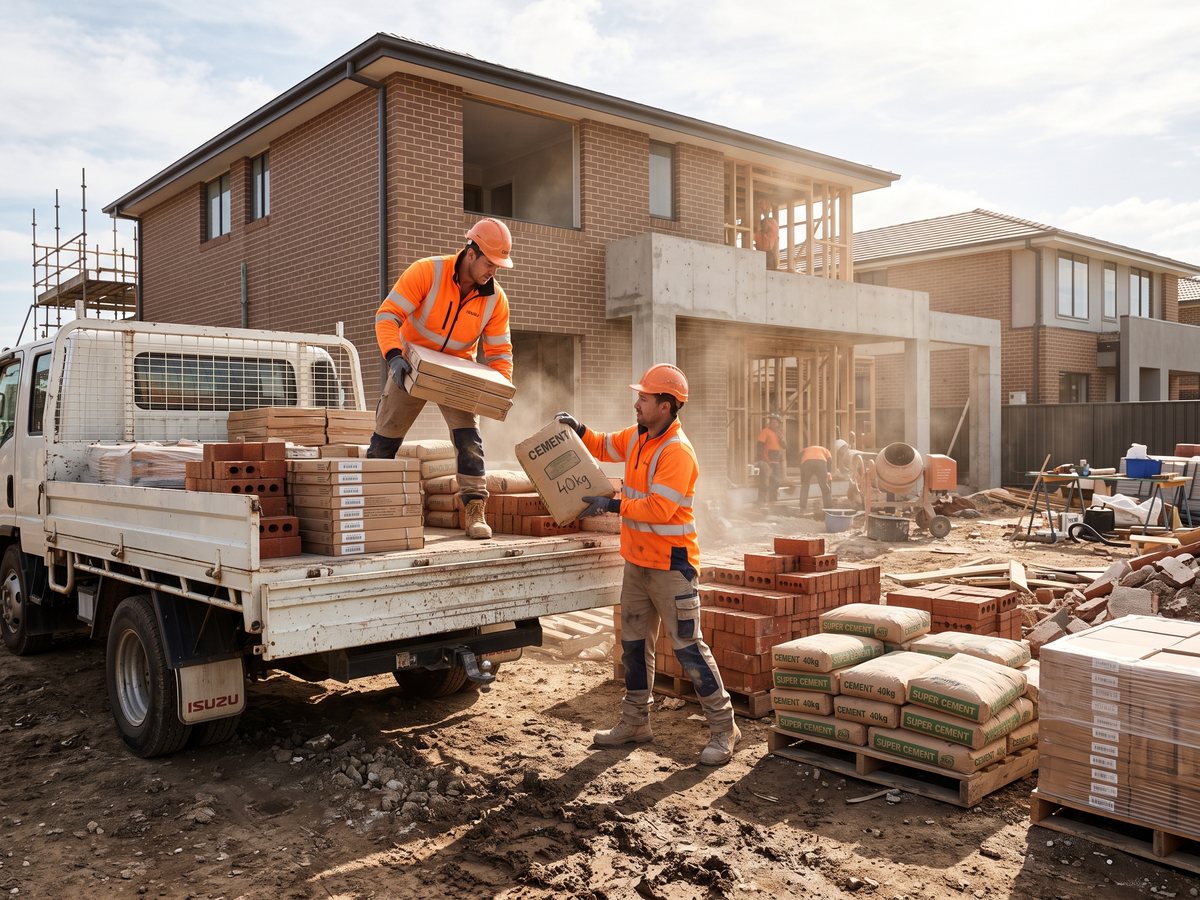
Construction materials transport — cement, bricks, drywall, tiles, pipes and rebar are delivered straight from the store, market or warehouse to your site. The load can be carried up to the floor, and a separate team is assigned for heavy materials.
- Delivery from stores and markets to your site
- Carrying to the floor can be ordered separately
- Covering to protect against dust and damage
- Ongoing cooperation throughout the renovation
Free insurance
Every order is insured
Fixed price
The amount quoted on the call does not change
24/7 orders
Nights, weekends, holidays
Materials provided by us
Stretch film, cardboard, straps
Work included in the price
Loading the material
Bags, packs and pallets are neatly loaded into the vehicle.
Preparing the truck body
The truck body is covered so no dust or debris is left.
Protecting fragile materials
Tiles, glass and drywall are secured separately.
Carrying to the floor
In buildings without a lift, carrying by hand is possible.
Unloading at the site
Materials are stacked at the indicated spot, not scattered.
Multiple trips
For large renovations, several trips are made on the same day.
From order to handover — 4 steps
Call or form
We ask about the type of material, the address and the floor.
Price and time
The amount is given and the delivery time is agreed.
Loading
The material is picked up from the store or warehouse.
Handover at the site
The load is unloaded at the indicated spot on the site.
What affects the price
No made-up rates: the amount is calculated on the call based on these factors and does not change when the move is finished.
- Weight and volume of the material
- Distance between the store and the site
- Floor and whether there is a lift
- Number of movers
- How many trips are needed per day
How construction materials are transported
Construction materials transport differs from ordinary cargo transport by weight. Cement, bricks and tiles are heavy even in small volumes — if the vehicle’s load capacity is chosen incorrectly, the trip stays unfinished. That is why the operator asks about the type and approximate quantity of material when taking the order.
The second issue is fragile material. Tiles, glass and drywall sheets must be secured flat and must not slide on the way. Yük.az holds these materials with separate supports and does not put heavy loads on top of them.
Within Baku, delivery from the store to the site is usually possible on the same day. For large renovations several trips can be planned on the same day — this is more affordable than ordering each trip separately.
Carrying to the floor is a separate service and is added to the price based on the number of floors. In buildings without a lift this should be mentioned in advance so enough movers come.
The most common mistake in construction materials transport is choosing the vehicle without considering the weight. A pallet of bricks or twenty bags of cement may look small, but they easily exceed the load limit of an ordinary van. That is why the type and quantity of material are confirmed when the order is taken — this prevents the trip from being left unfinished.
The second issue is the loading order. Heavy and sturdy materials go at the bottom, fragile and light ones at the top. Tiles and glass are kept flat with supports; drywall sheets are laid on a full flat surface so they don’t bend. When this rule is broken, the material is already unusable by the time it reaches the site.
Site conditions in construction materials transport
Delivery to the site is also planned separately. Narrow streets, the yard entrance and whether there is a ramp affect the size of the vehicle. If the entrance is narrow, a smaller vehicle and several trips work out more affordable — this should be discussed in advance.
Carrying to the floor is a separate service. In buildings without a lift the material is carried by hand and added to the price based on the number of floors. For large renovations several trips can be planned during the day — this is both cheaper and saves time compared with ordering each trip separately.
Access conditions at the site are confirmed before the trip. If the yard is narrow, the ground is soft or the unloading spot is far from the building, this affects the type of vehicle and the unloading time. When it’s known in advance, no day is lost.
The type of material determines the packing: bricks and blocks travel on pallets, dry mixes in bags, and long profiles in bundles. A cover is used for loose material so there is no loss or mess on the road.
Official information on road restrictions for vehicles carrying heavy loads is published on the website of the Azerbaijan Automobile Roads State Agency.
Most asked questions about this service
Yes. You give us the address of the store or market, and the team loads it there and delivers it to the site.
Carrying up is calculated separately — based on the number of floors and the weight of the material. The exact amount is given when you order.
Yes. Fragile material is secured separately, no heavy load is placed on top, and it is insured.
Yes. For large renovations we plan several trips during the day — this works out more affordable.
The truck body is covered before each trip and cleaned after unloading — no dust gets to the next load.
From any store, market or warehouse. You give us the address and order number, and the team picks up the material and delivers it to the site.
If required, a curtain-side or closed van is provided. When transporting in an open body, the load is covered with a waterproof cover.
Yes. Trips are planned on a schedule throughout the renovation, so there is no need to negotiate again each time.
Yes. You give us the addresses and the list, and the material is picked up in sequence and delivered to the site in one trip.
