

Gym equipment and treadmill moving: Safe Relocation Guide
Gym equipment and treadmill moving represents one of the most intricate and physically demanding challenges of any residential relocation, combining heavy mechanical steel structures with sensitive computerized drive systems and delicate sensor consoles. In contemporary Baku residences, motorized treadmills, stationary exercise bikes, elliptical cross-trainers, and multi-station weight gyms are central fixtures of healthy daily living. However, these complex training systems typically weigh anywhere between 80 and 250 kilograms, concentrating massive structural weight alongside fragile components such as digital motherboards, optical pulse sensors, inverter drive motors, and responsive touchscreens. Attempting to maneuver an assembled treadmill or heavy multi-gym without deliberate mechanical disassembly and specialized rigging dollies almost invariably causes gouged timber floorboards, cracked electronic consoles, or debilitating spinal injuries among amateur movers. A structured moving protocol ensures absolute safety and mechanical longevity for your home workout gear.
Gym equipment and treadmill moving: planning and pre-move inspection
Relocating precision fitness machinery demands disciplined engineering preparation rather than disorganized physical strain. Establishing a systematic pre-move inspection guarantees that every structural fastener, electrical connection, and kinematic joint is prepared for safe transit.
Electrical disconnection and drive motor compartment inspection
The moving procedure begins by completely disconnecting the motorized treadmill or smart exercise bike from the wall mains outlet and securing the power cord with Velcro straps. Removing the protective front motor hood allows technicians to clean accumulated interior dust and carpet fibers using a dry anti-static brush or vacuum nozzle. This critical cleaning step prevents loose debris from settling onto sensitive motor controller boards during road vibrations. Technicians always allow at least 15 to 20 minutes for internal capacitors to discharge fully before handling internal wiring harnesses.
Weight reduction and detachable component disassembly
Professional gym equipment and treadmill moving requires systematically stripping excess weight from the primary chassis before maneuvering through living quarters. Technicians detach side handrails, safety key tethers, accessory trays, and upright console pillars. On multi-station selectorized strength gyms, crews unbolt and remove all cast-iron weight plates, steel cables, pulleys, weight guide rods, and padded exercise benches. Removing 60 to 120 kilograms of modular iron weights transforms an immovable machine into a manageable skeleton frame, completely eliminating sudden center-of-gravity shifts on staircase descents.
Essential mechanical tools and rigging equipment
Safe disassembly and physical maneuvering require a comprehensive mechanical kit tailored to fitness equipment:
- Complete set of metric hex keys (Allen wrenches) and Torx screwdrivers;
- Non-marring dead-blow rubber mallets and open-ended box spanners;
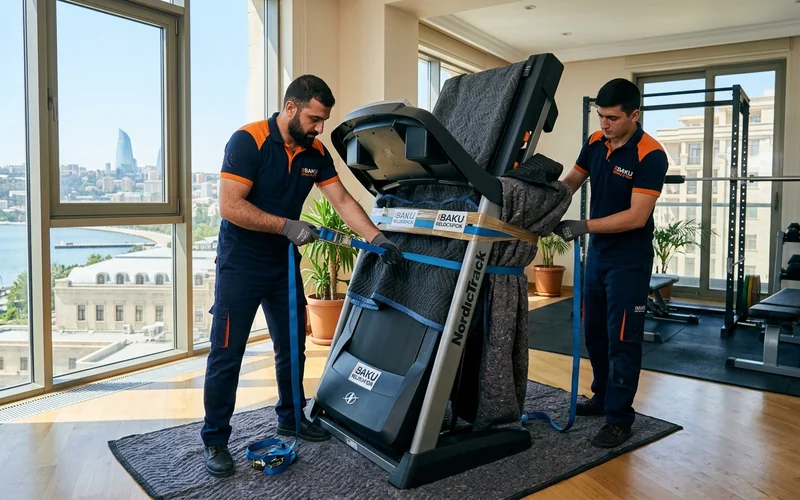
- Heavy-duty padded moving blankets and specialized floor protection runners;
- Five-ply corrugated cardboard sheets and impact-absorbing foam edge protectors;
- Commercial-grade bubble wrap and thick industrial stretch film;
- Ergonomic shoulder lifting straps (forearm forklifts) and heavy-duty four-wheel furniture dollies with non-marking polyurethane casters.
Packaging materials and multi-layer protective methods
Because home gym machinery merges heavy structural iron with fragile electronic touchscreens, packaging solutions must provide both impact cushioning and surface scratch resistance.
Protecting the running belt and walking deck
The continuous running belt and its underlying phenolic walking deck constitute the most critical and expensive kinematic assembly of any treadmill. Ingress of abrasive building dust, grit, or moisture onto the underside friction-reducing coating can destroy the drive motor within hours of operation. Once the running deck is folded upright, the belt perimeter is wrapped in clean corrugated cardboard and tightly sealed with multiple wraps of tensioned stretch film. This keeps the pre-lubricated silicone surface pristine and protected from external contaminants.
Cushioning digital consoles, touchscreens, and wiring harnesses
Modern treadmill consoles feature delicate microprocessors, interactive touchscreens, and integrated heart-rate monitoring circuits. Once unbolted from vertical support masts, the display unit is insulated with high-density foam padding and wrapped in three layers of heavy bubble cushioning wrap. Wire harness connectors are systematically labeled with masking tags, photographed to ensure foolproof reassembly, sealed against moisture, and stowed safely inside a dedicated cushioned box.
Packing weight plates, dumbbells, and powder-coated steel frames
Cast-iron weight stacks, barbell plates, and free weights represent massive concentrated point loads that easily shatter floor tiles. Every weight plate is individually wrapped in bubble wrap and packed into reinforced five-ply cardboard boxes limited to 25 to 30 kilograms per carton. Tubular steel frame uprights are cocooned in quilted moving blankets to prevent chipping powder-coated factory finishes.
Disassembly, lifting mechanics, and navigating staircases
When navigating multi-story residential buildings, safe gym equipment and treadmill moving relies on heavy-duty shoulder lifting straps and motorized equipment dollies to preserve structural integrity.
Locking folding decks and hydraulic gas pistons
Most residential treadmills incorporate a folding deck mechanism powered by a hydraulic gas piston (soft-drop cylinder). If the deck unlatches unexpectedly during transport, it can cause catastrophic crush injuries to moving crew members. Technicians verify that the mechanical safety latch is fully engaged and supplement it by binding the folded running deck to the frame with heavy-duty ratchet cinch straps, neutralizing any chance of accidental deployment.
Staircase descending techniques and shoulder dolly straps
In older Baku residential districts, such as classic five-story Khrushchev and nine-story Leningrad architectural layouts, elevators are narrow passenger cabins incapable of accommodating fitness machinery. Movers must descend staircase flights manually. Two trained rigging specialists utilize certified shoulder lifting harnesses (shoulder dolly straps), distributing the mass across leg and torso musculature. The heavier motor end is positioned uphill on stairs, synchronized footsteps are maintained, and corners are padded to prevent damaging stair railings.
Elevator logistics in modern Baku towers versus Soviet buildings
In modern Baku high-rise residential complexes equipped with oversized freight elevators (yuk lifti), the equipment rolls directly into the elevator cab on smooth polyurethane dollies. Floor protection sheets are laid across marble lobby tiles, ensuring zero scratch damage to building finishes.
Securing equipment inside cargo vehicles for road transit
Urban transit safety during gym equipment and treadmill moving depends heavily on dedicated cargo restraint bars and high-tensile ratchet lashing straps within enclosed box trucks.
Box trucks equipped with hydraulic liftgates (gidroboard)
Transporting heavy exercise equipment is safest when utilizing commercial box trucks fitted with hydraulic tail lifts (gidroboard). The treadmill or disassembled strength machine rolls smoothly onto the lowered hydraulic platform at street level and rises effortlessly to the cargo bed height. This eliminates dangerous manual high-lifting and reduces vibration stress on motor assemblies.
Upright anchoring with heavy-duty ratchet tie-down straps
Inside the cargo bay, treadmills are positioned either upright against padded sidewalls or laid horizontally on thick vibration-damping rubber mats. Heavy-duty ratchet tie-down straps anchor the chassis firmly against internal structural logistic tracks. No loose boxes or heavy items are ever stacked atop fitness machinery during transit.
Smooth driving protocols across Baku urban roadways
Baku roads feature varying gradients, speed humps, and dense traffic flows. Experienced commercial drivers operate with smooth acceleration, gentle braking curves, and moderate turning speeds to protect balanced motor flywheels and precision roller bearings from torsional shocks.
Reassembly, precision belt calibration, and new room placement
Delivering the equipment into the new residence represents only half the relocation job; meticulous mechanical reassembly and kinematic calibration are vital before workouts resume.
Subfloor inspection and equipment mat installation
The chosen location in the new home must have a structurally level floor free from dampness or direct radiator heat. Technicians lay down a high-density, closed-cell rubber equipment mat beneath the treadmill feet. This mat absorbs workout vibrations, prevents permanent indentations in hardwood or laminate flooring, and insulates impact noise from lower-level neighbors.
Mechanical frame reassembly and electronic harness connection
Following photo documentation, electronic wiring harnesses are threaded through vertical uprights without twisting or pinching between steel joints. Frame bolts are threaded by hand first to guarantee correct thread engagement, after which structural joints are torqued down evenly with metric hex tools.
Treadmill belt tracking, tension alignment, and deck lubrication
Road transit frequently shifts the alignment of the running belt. Using rear roller tensioning bolts, technicians adjust tracking so the belt runs perfectly centered between deck rails. A uniform coat of 100% pure silicone treadmill lubricant is applied beneath the belt surface to eliminate friction heat. The treadmill is tested on idle speed at 2 to 3 km/h to confirm smooth operation before client handover.
Critical mistakes to avoid when moving home fitness gear
Unprofessional moving practices frequently produce avoidable damage. Common mistakes include:
- Attempting to lift a folding treadmill without securing the deck latch with secondary straps;
- Transporting heavy multi-gym towers without dismounting modular iron weight stacks;
- Hoisting heavy machinery by fragile plastic console housings or handlebar pulse grips;
- Transporting sensitive computerized equipment in open pickup trucks exposed to rain and dust;
- Powering up cold electronic consoles immediately after winter transit without temperature acclimatization.
Frequently Asked Questions
How is the cost for gym equipment and treadmill moving determined?
Service pricing is calculated transparently based on total equipment weight and dimensions, disassembly requirements, floor levels, freight elevator accessibility, and total transportation distance across Baku.
Can a home treadmill be transported fully assembled without disassembly?
If residential doorways, corridors, and elevators offer ample clearance, a compact treadmill can be moved folded without total disassembly over short distances. However, removing the upper console and mast pillars is strongly advised to prevent expensive electronic damage.
What is the safest method to transport heavy weight stacks and barbells?
Weight plates must always be removed individually from guide rods, wrapped in bubble cushioning, and packed into heavy-duty cartons limited to 25 to 30 kg each. This protects the equipment frame and prevents subfloor damage.
Does a treadmill require recalibration and silicone lubrication after moving?
Yes. Road vibrations and relocation handling inevitably affect belt alignment and tension. Recalibrating rear roller bolts and applying fresh silicone deck lubricant ensures frictionless motor performance and extends machine longevity.
Safeguarding your high-end treadmill and home strength gear requires specialized technical craftsmanship and dedicated transport tools. When you demand safe transit, meticulous disassembly, and flawless reassembly, turn to the certified rigging specialists and skilled technicians on Yuk.az. Experience a seamless residential move and keep your home fitness routine performing at its peak.
Related service: Special cargo transport — to get a price, call 050 209 62 99.

Related posts

Cargo transportation in Zangilan: reliable moving service
Cargo transportation in Zangilan plays an essential role in facilitating the his

TIR cargo transportation in Kangarli: travertine and freight
TIR cargo transportation in Kangarli serves as a vital logistics solution for th

TIR cargo transportation in Hajigabul: transit logistics hub
TIR cargo transportation in Hajigabul delivers indispensable logistics capabilit

Leave a Reply