

Sofa and armchair moving guide: safe upholstered transport
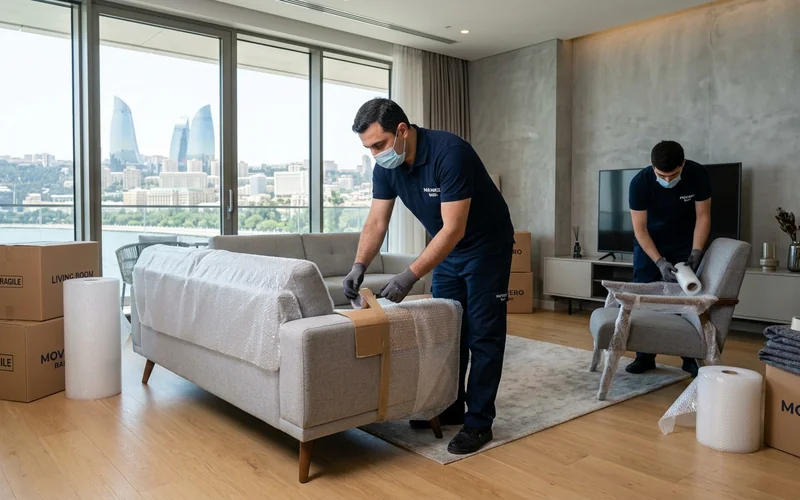
Sofa and armchair moving is one of the most demanding stages of any apartment or office relocation, requiring specialized care, the right protective packing supplies, and safe handling techniques. Upholstered living room furniture represents a substantial financial and emotional investment, serving as the focal point of comfort in your home. However, large dimensions, heavy internal frames, and fragile upholstery make sofas and armchairs vulnerable to damage during transport. Without adequate preparation, premium leather, velvet, or linen fabrics can easily tear on narrow door frames, accumulate dirt in stairwells, or suffer structural joint damage inside a moving truck. When relocating valuable furniture, understanding every phase of the moving process guarantees a damage-free transition. This comprehensive guide covers everything you need to know about preparing, packing, disassembling, moving, and reassembling upholstered seating.
Preparation and Planning for Safe Upholstered Furniture Transport
Successful moving always begins with thorough planning and precise measurements. Rushing the process without assessing pathways often leads to gouged door trim, scuffed plaster, and ripped upholstery.
Accurate measurement of furniture dimensions and doorways
Before lifting any furniture, record precise measurements including total length, depth, height, and diagonal width across arms. Next, measure all transit pathways: room entryways, hallway corners, stair landings, building main doors, and elevator dimensions. In older residential buildings across Baku (such as Soviet-era Khrushchev or Stalinka layouts), narrow stairwells and compact entryways frequently prevent intact sofas from passing through. Knowing these dimensions beforehand helps determine exactly which components must be disassembled.
Evaluating fabric and delicate leather upholstery needs
The upholstery type dictates the protective wrapping strategy. Genuine leather is susceptible to scuffs, punctures, friction burns, and temperature fluctuations. Woven fabric covers readily absorb airborne dust, grime, and moisture. Inspect your sofa and armchairs prior to packing, noting any pre-existing blemishes, and plan extra cushioning for fragile seams and decorative trims.
Removing cushions, accessories, and modular parts
Always remove loose throw pillows, back cushions, seat cushions, slipcovers, and bottom storage drawers before lifting the main frame. Removing these items significantly lightens the sofa’s load and slims its outer silhouette, allowing movers to maintain a firm grip on the solid structural frame. Store loose cushions securely in heavy-duty plastic bags or clean moving cartons.
Essential Packing Materials and Cushioning Techniques
A successful sofa and armchair moving requires specialized multi-layer protection rather than random household blankets. Purpose-made packing materials shield expensive fabrics from moisture, friction, and road impact.
Applying bubble wrap and waterproof stretch film
Begin by wrapping the entire sofa body in heavy-duty bubble wrap, which serves as a shock-absorbing buffer against accidental impacts. Next, apply at least three to four layers of industrial stretch film around the perimeter. Stretch film creates an airtight seal that guards against Baku’s notorious dust storms, high humidity, and rainy weather. For genuine leather sofas, never apply stretch wrap directly onto bare leather; always place breathable moving blankets or bubble wrap underneath to prevent condensation buildup that could ruin the hide.
Reinforced cardboard edge protectors and foam padding
The lower corners, rear edges, and armrest tips endure the highest friction when maneuvering through tight entryways. Protect these critical impact zones using rigid corrugated cardboard corner guards secured with high-grade packaging tape. Wooden feet, decorative scrollwork, and exposed metal legs should be wrapped separately in thick foam padding.
Essential packing supplies checklist
- Heavy-duty air bubble wrap – absorbs physical impacts and cushions sensitive corners;
- Industrial waterproof stretch film – seals against humidity, dirt, rain, and street dust;
- Corrugated cardboard edge guards – prevent fabric tearing and edge chipping in narrow corridors;
- Reinforced packing tape – securely binds outer protective layers without adhering to upholstery;
- Heavy moving blankets and lifting straps – deliver crucial surface protection and ergonomic handling support.
Disassembly and Navigation Techniques for Narrow Spaces
Transporting large sectional sofas or multi-piece transformer sets in one piece is dangerous and physically impractical. Following a systematic disassembly plan makes moving much safer.
Dismantling corner sectionals and pull-out mechanisms
Sectional sofas (L-shape and U-shape) must always be separated into their individual modules. Detaching the armrests first instantly reduces the sofa’s width by 20 to 40 centimeters, often making the difference between clearing a doorway or getting stuck. Pull-out sleeper sofa beds (dolphin, click-clack, or eurobook mechanisms) must be folded shut and locked down with ratchet straps so they cannot spring open during carrying. Store all bolts, screws, and washers in a labelled ziplock bag taped securely to the inner frame.
Maneuvering Soviet-era stairwells versus modern Baku high-rises
While modern Baku residential high-rises generally feature spacious freight elevators, older five-story or nine-story walk-ups lack service lifts. Moving a massive sofa down multiple flights of stairs requires seasoned porters equipped with heavy-duty lifting shoulder straps. These straps transfer the bulk of the weight directly to the porters’ torso and legs, leaving their hands free to guide the sofa around tricky stair landing angles without scraping the walls.
Securing Sofas and Armchairs Inside the Moving Truck
During professional sofa and armchair moving operations, cargo must be anchored tightly within an enclosed moving vehicle to survive transit.
Optimal vertical and horizontal loading configuration
Position sofas along the flat sidewalls of the cargo truck, resting on clean floor protection or rubberized mats. Sofas should never be balanced on fragile armrests, nor should heavy moving crates or household appliances be stacked on top of upholstered seating. Armchairs should be positioned adjacent to sofas, with softer bags cushioning any remaining gaps between pieces.
Heavy-duty ratchet tie-down straps and sidewall anchoring
Professional cargo trucks feature integrated wall tracking systems. Heavy-duty ratchet tie-down straps are looped around the structural frame of the sofa and fastened to the truck walls. This prevents any sliding, rocking, or falling when navigating speed bumps, sudden stops, or sharp corners on Baku roadways.
Sofa and Armchair Moving: Reassembly and Final Placement
Upon arrival at the destination, the reverse installation process must be executed with identical care and precision.
Step-by-step reassembly and hardware tightening
Position the main frame in the designated room before reattaching the legs, side panels, and armrests. Reconnect all modular brackets and tighten hardware firmly with appropriate wrenches. Test sleeper bed mechanisms and reclining functions several times to verify smooth, quiet operation without alignment issues.
Unpacking safely and inspecting upholstery surfaces
When unwrapping stretch film and bubble wrap, avoid using utility blades directly over upholstery fabric. Cut packaging along taped seams with extreme care to avoid slicing the underlying fabric. Once unwrapped, wipe down leather or vacuum fabric cushions, and inspect all seams to confirm complete, pristine condition.
Transparent Cost Factors for Moving Furniture in Baku
When calculating the budget for sofa and armchair moving in Baku, several factors influence final pricing:
- Furniture dimensions and module complexity (straight two-seater versus large sectional modular sofa);
- Floor level and availability of a freight elevator (manual stair carry requires more labor);
- Need for professional carpenter assistance (dismantling complex mechanical frames);
- Volume and quality of protective packaging materials used;
- Transit distance and route (Baku city center versus Absheron suburban locations).
Frequently Asked Questions (FAQ)
Is it possible to move a sofa without disassembling it?
If the sofa easily fits through interior doors, hallways, and freight elevators, a standard two-seater straight sofa can be transported assembled. However, for sectionals and bulky couches, removing armrests and legs is strongly advised to prevent structural frame stress and wall scratches.
How should genuine leather sofas be protected during relocation?
Never wrap real leather directly in plastic stretch film. Lack of airflow can trap moisture and cause mildew or permanent skin blemishes. Wrap leather sofas in breathable moving blankets or bubble wrap first, and then apply stretch film over the protective padding.
What if a large sofa does not fit through a narrow doorway?
If a sofa gets stuck, skilled movers dismantle the armrests and base frame. If it still does not clear, the sofa can often be maneuvered through doorways by tilting it into an upright vertical hook or rotational pivot angle.
How do professional movers protect furniture from Baku’s windy weather?
Baku’s strong winds and airborne sand require multiple layers of tight waterproof stretch wrap sealed with durable packing tape, alongside fully enclosed box truck transportation.
In conclusion, sofa and armchair moving should never be left to chance or inexperienced handling. High-value living room seating deserves dedicated protection, proper tools, and skilled personnel. To ensure a completely stress-free relocation with guaranteed safety for your furnishings, book your move through Yuk.az today and enjoy premier moving assistance throughout Baku and Azerbaijan.
Related service: Special cargo transport — to get a price, call 050 209 62 99.

Related posts
TIR cargo transportation in Ordubad: fruit export & logistics
For commercial orchards and regional manufacturing enterprises, professional TIR

Cargo transportation in Naftalan: resort and home moving
Professional cargo transportation in Naftalan is an essential service for medica
Cargo transportation in Mardakan: villa and house moving
Professional cargo transportation in Mardakan provides homeowners, villa residen

Leave a Reply