

Washing Machine Moving: Transit Bolts, Draining & Tips
Washing machine moving requires meticulous mechanical preparation, careful handling, and precise coordination during any residential relocation. Among common household appliances, a washing machine is particularly vulnerable due to its heavy concrete counterweights, spring-suspended wash drum, and sensitive electronic circuit boards. Improper handling can bend support brackets, fracture the outer tub, or damage delicate internal plumbing. Relocating this heavyweight appliance safely demands a methodical step-by-step approach rather than brute force alone.
Essential preparation for washing machine moving
Preparation should begin at least 24 hours prior to moving day. Rushing to disconnect the appliance at the last minute often leads to residual water leaking onto flooring, furniture, and internal electrical components, causing expensive repairs.
Disconnecting electrical supply and water inlet valves
Always unplug the power cord from the wall outlet first. Coil the power cord neatly and fasten it to the rear cabinet using cable ties or heavy-duty tape to avoid tripping hazards. Next, shut off the cold and hot water supply valves completely. Unscrew the water inlet hoses from both the wall taps and the rear connectors on the machine. Keep a bucket and towels handy, as pressurized water will drain from the lines upon disconnection.
Draining residual water from the drain pump and filter
Even after a complete spin cycle, one to two liters of stagnant water remain trapped in the internal sump hose and pump filter housing. If this liquid is not drained, it can seep into electronic modules during transit. Locate the drain filter access panel at the bottom right corner of the front facade. Pull out the miniature emergency drain hose to empty the reservoir into a shallow pan. Next, unscrew the debris filter, clean out lint and sediment, and wipe the chamber dry. Remove the detergent dispenser drawer, rinse away residue, and allow it to air-dry.
Securing the drum: Installing transit bolts correctly
Inside the washing machine, the wash tub floats on dampening suspension springs and shock absorbers engineered to manage high-speed spin vibrations. When the machine is transported along bumpy streets, these flexible supports allow the heavy drum to swing wildly, smashing against the metal housing.
The critical role of shipping bolts
Transit bolts (also known as shipping bolts) are heavy-duty metal screws paired with rigid plastic spacers designed specifically for transport. Inserting these bolts through the pre-drilled holes in the rear panel anchors the suspension drum firmly against the chassis. This eliminates all lateral and vertical movement, safeguarding bearings, spider brackets, and suspension mounts from severe road shocks.
Safe alternatives when transit bolts are missing
If the original transit bolts have been misplaced, replacement kits can often be sourced from manufacturers or hardware providers. When replacement is impossible, experienced movers remove the top panel of the washer and wedge high-density foam blocks, folded moving blankets, or bubble wrap tightly between the drum and the outer cabinet walls. This reduces internal sway, although the vehicle must be driven with utmost caution.
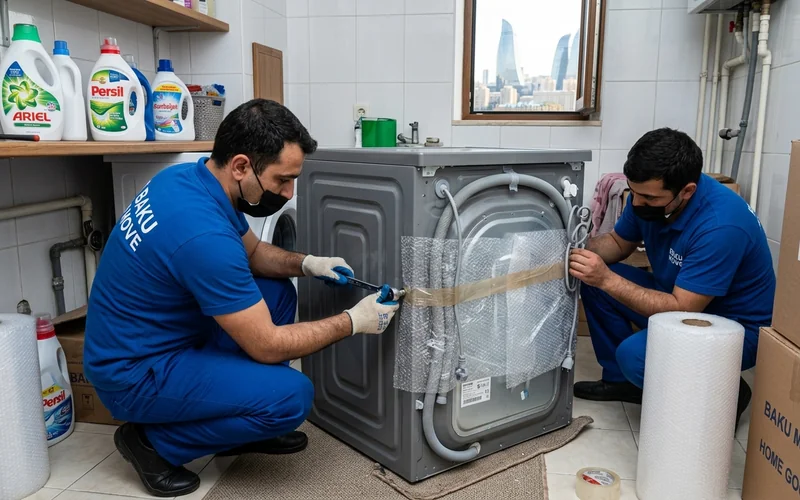
Protective packing materials and surface shielding
Navigating apartment buildings in Baku involves narrow staircase turns, concrete landings, and compact doorways that can easily dent enamel panels or crack glass portholes without robust protective wrappings.
- Heavy-duty bubble wrap: Encase the entire steel chassis in two to three layers of thick bubble wrap to absorb direct impacts.
- Corner protectors: Foam or corrugated edge guards prevent denting and paint chipping on all sharp corners.
- Industrial stretch film: Tightly bind all cushioning layers to keep them securely in place during transport.
- Corrugated cardboard sheeting: Place thick cardboard over the front digital display panel and glass door to prevent scratches.
Dry all drain and inlet hoses completely, wrap them in clean rags, and tape them securely to the rear panel so they do not drag across the ground or catch on banisters.
Safe lifting, stairs navigation, and physical handling
A typical residential washing machine weighs between 60 and 85 kilograms, primarily due to heavy concrete stabilizing blocks situated at the top and bottom of the tub. Moving this bulk demands proper lifting mechanics to protect both human health and delicate machinery.
Freight elevators versus narrow stairwells
While modern Baku residential high-rises provide spacious freight elevators, older buildings (such as Khrushchev-era or Leningrad-style blocks) often lack elevator access. Carrying an 80-kg washer down multiple flights of stairs requires two trained porters equipped with heavy-duty lifting straps. These shoulder straps distribute the appliance’s weight across strong leg and core muscles while allowing the carriers to keep the machine upright.
Why moving a washer on its side is dangerous
Transporting a washing machine horizontally or upside down is strongly discouraged by manufacturers. Laying the unit on its side can displace the internal counterweights, rupture shock absorber seals, and cause residual moisture to drown the printed circuit board (PCB). Always maintain an upright orientation, tilting slightly only when negotiating high door thresholds.
Securing the appliance inside the moving vehicle
Once loaded onto the truck, positioning is critical to prevent dangerous shifting during transit. Sudden braking or sharp cornering can easily send a freestanding appliance crashing into surrounding furniture.
Place the washing machine upright against the front bulkhead or a sturdy side wall of the cargo box. Place a non-slip rubber mat or moving pad beneath the feet to absorb road vibrations. Secure the washer tightly to the vehicle’s interior tie-down tracks using heavy-duty ratchet tie-down straps. Professional moving platforms like Yuk.az supply fully equipped trucks and vetted moving teams who ensure every household appliance is tied down to the highest safety standards.
Reinstallation, leveling, and testing at your new home
Upon arriving at your destination, do not rush to connect power immediately. Allow the machine to acclimatize to room temperature for two to three hours, preventing internal condensation that could short-circuit electronics.
Removing transit bolts and leveling the feet
The single most important reinstallation rule is removing the transit bolts before powering on! Running a cycle with shipping bolts in place will cause catastrophic mechanical failure, violent jumping, and severe floor damage. After unscrewing the bolts, insert the plastic aesthetic caps. Place a spirit level on top of the machine and adjust the threaded rubber feet until the cabinet is perfectly horizontal, then tighten the locknuts securely.
Plumbing connections and trial run
Reconnect the water inlet hose, inspecting rubber washers for wear to prevent leaks. Position the drain pipe at the required height (typically 60 to 90 cm above floor level) to avoid accidental siphonage. Run a short empty rinse cycle to verify watertight seals, smooth water intake, and vibration-free spin performance.
Pricing factors for washing machine moving services
The total cost of washing machine moving in Baku and the Absheron peninsula is determined by the size and weight of the appliance, the building floor level, elevator availability, and overall transport distance. Hiring experienced porters and plumbing technicians ensures that your investment remains completely protected against costly damages.
Frequently Asked Questions
Can you lay a washing machine flat during transport?
Transporting a washing machine horizontally is risky and should be avoided whenever possible. If unavoidable, drain all water thoroughly, install transit bolts, and lay the machine on its rear panel over thick padding. Never transport it on its front or sides, as this can severely damage the glass door and control panel.
How do you move a washing machine without shipping bolts?
If shipping bolts are missing, remove the top lid and stuff dense foam blocks or moving blankets around the tub to restrict drum travel. Drive at low speeds and avoid sudden stops. For maximum safety, purchase replacement bolts before moving day.
When can I use my washing machine after moving?
Wait at least 2 to 4 hours before plugging the machine in, especially in cold weather, to let condensation evaporate. Ensure transit bolts are removed, feet are leveled, and water hoses are tight before starting a test cycle.
Why hire professional movers for washing machine moving?
Because of heavy counterweights, narrow hallways, and fragile electronic components, moving a washer without proper tools carries a high risk of injury and expensive property damage. Professional movers possess specialized straps, padded trucks, and technical expertise to handle the job effortlessly.
Related service: Industrial cargo transport — to get a price, call 050 209 62 99.

Related posts
Cargo transportation in Babek: safe moving and delivery
Cargo transportation in Babek plays an essential role in supporting the vibrant

TIR cargo transportation in Babek: agro and processed freight
TIR cargo transportation in Babek plays an essential role in sustaining the supp

Moving services in Binagadi: furniture and home move
Moving services in Binagadi start with an estimate of the furniture and the acce

Leave a Reply