

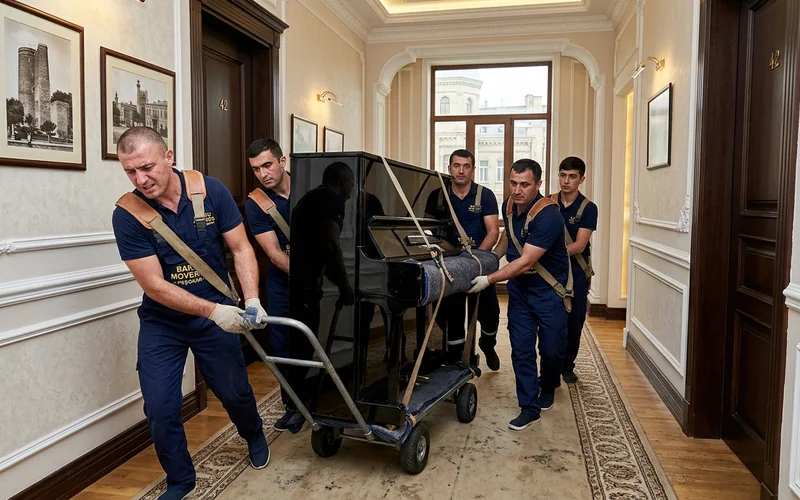
Piano moving services in Baku: safe rigging and transport
Piano moving services demand exceptional technical precision, physical strength, and specialized equipment due to the immense weight and fragile acoustic engineering of upright and grand instruments. A piano is not standard furniture; it contains a massive cast-iron harp bearing tens of tons of string tension, an intricate wooden soundboard, and thousands of delicate mechanical action parts. Even a minor bump against a doorframe, improper tilting on stairs, or sudden exposure to harsh weather can cause irreversible damage to the soundboard or finish. Attempting to move such a valuable treasure with inexperienced movers or casual helpers poses severe safety hazards and risks expensive restoration. Relying on certified rigging professionals is the only dependable method to ensure flawless transport.
Why Specialized Piano Moving Services Are Essential for Safety
Assessing Instrument Weight and Model Specifications
Before initiating any movement, it is essential to determine the exact model and weight of the instrument. Traditional Soviet-era uprights (such as Belarus, Krasny Oktyabr, or Rostov-Don) typically weigh between 220 and 370 kilograms due to heavy cast-iron frames. Contemporary upright models from Yamaha, Kawai, and Petrof range between 200 and 280 kilograms, while grand pianos (baby grand to full concert grand) easily reach 300 to 550 kilograms. Accurate weight calculation dictates the necessary crew size—usually four to six qualified riggers—and dictates the required mechanical gear.
Inspecting Transit Pathways, Doorways, and Turning Radii
Professional movers conduct a thorough site survey before touching the instrument. Every door frame, tight hallway corner, and staircase landing must be measured with meticulous precision. High-traffic floor surfaces, including hardwood parquet, laminate, or fine tile, are protected with heavy corrugated cardboard or protective runners. Any decorative items, rugs, or wall fixtures that could obstruct the crew or cause tripping hazards are removed beforehand.
Securing Internal Action Mechanisms and Moving Components
The sensitive action mechanism, featuring felt hammers and dampers, is highly vulnerable to vibration. The keyboard fallboard is secured over a protective felt strip to prevent key movement and scuffing during transit. Removable access panels and pedal linkages are inspected, locked, or taped with non-marring painter tape to guarantee that internal mechanisms remain motionless throughout the journey.
Professional Packing Materials and Protective Techniques
Heavy-Duty Moving Blankets and Padded Quilts
The high-gloss lacquer or polished wood veneer of a piano is exceptionally susceptible to surface scratches. The primary protective barrier consists of heavy, dense moving blankets. These padded textiles are wrapped tightly around the entire cabinet, absorbing accidental impacts and creating a cushioned buffer against heavy rigging straps.
Cushioned Bubble Wrap and Heavy Stretch Film
Over the moving blankets, multiple layers of industrial bubble wrap are applied to shield against humidity, dust, and temperature shifts. A durable layer of stretch film seals the package tightly. When executing certified piano moving services, riggers place rigid molded cardboard or foam corner protectors along all vulnerable exterior edges to eliminate impact damage during transport.
Disassembly, Stair Navigation, and Rigging Mechanics
Grand Piano Breakdown: Removing Legs, Lyre, and Lid
Unlike upright models, grand pianos must be partially disassembled for safe relocation. An experienced technician removes the heavy acoustic lid, the three support legs, and the pedal lyre. Each component is individually padded. The main body is then rotated safely onto its flat side atop a specialized, heavy-duty piano skid board and secured tightly with heavy-duty ratchet straps.
Heavy-Duty Harness Straps and Synchronized Lifting
Lifting an upright piano by its small exterior wooden handles is dangerous and can rip the wood apart. During residential piano moving services in Baku, crews utilize specialized shoulder and back rigging harness straps. These heavy webbing straps distribute the load across the skeletal frame of four strong movers, keeping their hands free to balance and navigate narrow stairways. The entire descent is carried out in absolute unison under a designated crew leader.
Navigating Baku Buildings: Modern Freight Elevators vs Soviet Stairwells
Modern residential high-rises (Novostroyka) equipped with spacious cargo elevators allow straightforward transit using heavy-duty rubber-wheeled dollies. In contrast, older Soviet architecture (Stalinka and Khrushchevka buildings) features narrow staircases and tight 180-degree landings without elevators. Movers must carefully negotiate these steps inch by inch, keeping the center of gravity strictly controlled to avoid dangerous drops.
Vehicle Loading, Hydraulic Liftgates, and Truck Securing
Air-Ride Furniture Trucks and Hydraulic Tail Lifts
Transporting valuable acoustic instruments in open flatbeds is out of the question. Certified piano moving services rely on clean, weather-tight box trucks fitted with air-ride suspension. A hydraulic liftgate or sturdy reinforced loading ramp ensures that the piano glides smoothly from ground level into the cargo compartment without jarring shocks.
Vertical Wall Mounting and Industrial Ratchet Tie-Downs
An acoustic piano must always be transported standing vertically; placing it flat on its back can snap the iron plate under road vibrations. Inside the truck, the instrument is anchored firmly against reinforced side slats using heavy-duty ratchet straps. To explore more about the complex craftsmanship of acoustic keyboard instruments, read the detailed overview of the piano on Wikipedia.
Placement, Climate Acclimation, and Tuning in Your New Home
Selecting the Ideal Position and Climate Control
Upon arrival, the piano should be placed in an optimal room position away from heat radiators, air conditioner vents, and direct sunlight. Severe thermal shifts dry out the wooden soundboard and weaken glue joints. Placing the instrument against an interior partition wall provides the most stable humidity and temperature conditions.
Acclimation Period and Subsequent Tuning
Tuning the piano immediately after moving is a major technical mistake. When moved during cold seasons, the instrument should remain wrapped for several hours to prevent condensation on strings and tuning pins. The wood and metal components require 10 to 14 days to stabilize in the new indoor climate. Only after this acclimation period should a professional piano tuner be engaged to calibrate pitch and regulation.
Moving Rates in Baku and Hiring Trusted Professionals
Moving rates in Baku are calculated transparently based on instrument category, total floor count, presence of functional freight elevators, and transit distance across the Absheron peninsula. For complete peace of mind and damage-free relocation handled by skilled rigging crews, visit Yuk.az to schedule your musical move.
To avoid frequent and costly moving blunders, keep these crucial relocation guidelines in mind:
- Never roll a heavy piano on its built-in metal casters over long distances, as they can gouge floors and snap off.
- Always employ at least four physically fit movers equipped with specialized rigging straps for stair descents.
- Wrap the entire instrument in padded moving blankets and bubble wrap to prevent scuffs and moisture intrusion.
- Ensure the piano is fastened vertically to the vehicle interior with industrial ratchet straps before dispatch.
- Allow the acoustic instrument to rest for at least 10 to 14 days in its new room before hiring a tuner.
Frequently Asked Questions
Can an upright piano be moved up stairs without an elevator?
Yes, trained rigging crews routinely transport pianos up high floors using specialized harness straps and planned resting breaks. Transparent per-floor rates apply for manual stair carries.
Is it mandatory to dismantle a grand piano for relocation?
Yes, grand pianos cannot fit through standard doorways or turn corners while assembled. Disassembling the legs, lyre, and lid is mandatory for structural protection and safe navigation.
Why should I wait two weeks before tuning the piano?
Acoustic woods and strings expand and contract in response to humidity and temperature changes. Allowing 10 to 14 days enables the instrument to settle, ensuring the subsequent tuning stays firm.
How do movers protect flooring and walls during the move?
Crews lay heavy corrugated floor runners along the route and protect doorway jambs with soft padding. Instruments are transported using rubber-tired dollies and harness straps that never touch delicate flooring.
In summary, successfully relocating a valuable piano requires engineering diligence, appropriate protective packing, and seasoned rigging expertise. Entrusting your prized instrument to certified movers ensures that its timeless voice and exquisite exterior remain pristine for generations of music to come.
Related service: Special cargo transport — to get a price, call 050 209 62 99.

Related posts

Piano Transportation: Professional and Safe Service
Piano transportation is always a complex process that requires special attention

Mirror and glass display moving: complete safety guide
During residential or corporate relocations, mirror and glass display moving sta

Cargo transportation in Beylagan: reliable moving services
Cargo transportation in Beylagan is an indispensable logistics service that supp

Leave a Reply