

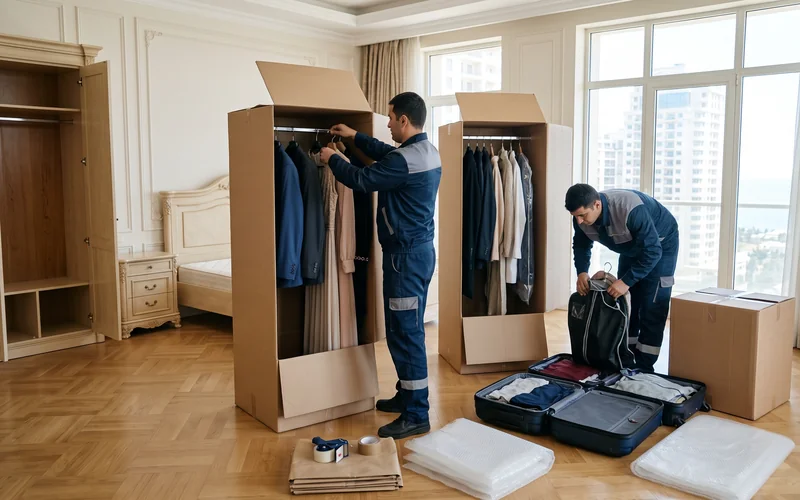
Clothes and personal effects moving: Wardrobe Box Packing Guide
Clothes and personal effects moving is often one of the most time-consuming and delicate stages of relocating to a new home, requiring systematic planning and specialized protective supplies. Many people mistakenly assume that throwing all garments into oversized plastic trash bags or haphazard storage bins is the fastest method. However, this shortcut inevitably leads to deep creases on tailored suits, snagged evening dresses, ruined shoe shapes, and days of disorganization in your new residence. When handled strategically, clothes and personal effects moving becomes a seamless experience rather than a chaotic scramble, preserving fabric integrity and saving immense time. In this comprehensive relocation guide, we break down the mechanics of wardrobe boxes with hanging rails, compression vacuum bags, room-by-room labeling, and best practices for navigating apartment logistics across Baku.
Clothes and personal effects moving: Preparation and Sorting Strategy
A stress-free wardrobe relocation does not begin with taping boxes; it starts with an objective decluttering process. Closets naturally accumulate garments that are no longer worn or need tailoring. Transporting unnecessary clothing adds redundant volume to moving trucks and increases packaging costs.
Closet decluttering and seasonal categorization
Several days prior to moving day, categorize your entire wardrobe into three groups: current seasonal clothing, off-season garments (such as heavy winter parkas, ski suits, or summer beachwear), and formal event attire. Items you have not worn for over a year should be donated or recycled. This substantially reduces the required moving boxes and frees up valuable space in your new closets. Ensure that every item is completely clean and dry before boxing; packing damp textiles into sealed boxes creates musty odors and fabric mildew.
Packing the indispensable “First-Night Box”
Every member of the household should prepare a personal travel bag containing essentials for the first 24 to 48 hours in the new home. This kit should include comfortable loungewear, pajamas, fresh undergarments, a change of clothes for work the next morning, essential toiletries, phone chargers, and fresh bath towels. Having this bag ready avoids the late-night frustration of rummaging through dozens of sealed cardboard boxes just to find a clean shirt or toothbrush.
Securing valuable accessories and vital personal documents
Fine jewelry, luxury wristwatches, passports, academic certificates, and vital legal paperwork must never be mixed with standard wardrobe boxes or furniture loads. Keep these irreplaceable personal effects in locked travel organizers or small cases, carrying them personally inside your private vehicle rather than placing them in the cargo truck.
Wardrobe boxes and specialized packing supplies
Protecting textiles from dust, humidity, and wrinkles requires purpose-built packaging solutions designed specifically for domestic and international relocations:
- Wardrobe boxes with metal hanger bars: Heavy-duty, 5-ply corrugated cardboard boxes equipped with an integrated metal rail. Clothes transfer directly from the closet on their original hangers without folding.
- Vacuum compression storage bags: Airtight plastic bags that condense bulky blankets, duvets, pillows, and synthetic winter jackets by up to 70% using a standard vacuum cleaner.
- Garment bags and zippered breath covers: Breathable fabric or transparent poly covers that shield delicate gowns, tuxedos, and tailored wool coats from transit friction.
- Acid-free white packing tissue paper: Clean wrapping paper without newspaper ink, ideal for stuffing leather boots, wrapping delicate silk, and protecting footwear finishes.
- Heavy-duty 5-layer moving boxes and stretch wrap: Perfect for folded everyday knitwear, jeans, and casual clothing, sealed with stretch wrap for moisture resistance.
The unmatched value of wardrobe boxes
Wardrobe boxes represent the gold standard for garment protection during home moves. Because clothing remains suspended vertically on sturdy metal rails, blazers, dresses, trousers, and trench coats never wrinkle, sag, or crush under external weight. Upon arrival at the new address, items are effortlessly transferred back into your wardrobe within minutes, completely eliminating costly dry-cleaning bills or laborious hours of ironing. Furthermore, the unused bottom area of the wardrobe box provides safe space for lightweight accessories, handbags, or boxed shoes.
Best practices for vacuum compression bags
Vacuum bags are unrivaled for compacting bulky linens, down comforters, and synthetic puffer jackets. However, caution is required: natural leather, delicate suede, real fur coats, and pure silk garments should never be vacuum-sealed. The lack of air and extreme physical compression can crack leather coatings, break natural fur follicles, and permanently crush delicate natural fibers.
Garment packing techniques and systematic room labeling
For everyday t-shirts, casual shirts, and denim, vertical rolling—inspired by the KonMari method—proves far superior to standard flat stacking. Rolling minimizes creasing, prevents deep fabric fold lines, and enables you to view every single article when opening the box without disturbing the lower layers.
Footwear protection and packing rules
Never toss footwear loosely into boxes alongside everyday apparel. Dirty shoe outsoles and sharp heels can stain or puncture delicate fabrics. Wipe each pair clean, insert crumbled acid-free tissue paper into the toe boxes to maintain their shape, and place each pair in its original shoebox or individual fabric shoe pouch. Pack heavier winter boots at the base of medium boxes and lighter loafers or sandals on top.
Color-coded room identification system
Clearly label all cardboard boxes with permanent markers indicating the target room (e.g., “Master Bedroom Closet”, “Children’s Room”) and a brief summary of contents. Applying distinct colored tape (such as blue for the primary suite and green for children’s bedrooms) allows porters to position each box directly in its designated closet area immediately upon arrival.
Truck loading and Baku apartment logistics
Securing cargo within the moving vehicle requires strict adherence to spatial balance. Wardrobe boxes must always stand upright along the interior walls of the truck and be strapped tightly with ratcheting cargo belts. Heavy furniture parts or metal bed frames must never be placed on top of cardboard wardrobe boxes, as this will crush the structure and collapse the hanging rail.
Across Baku, efficient clothes and personal effects moving requires addressing specific architectural challenges, such as narrow Soviet corridors in legacy Khrushchev buildings versus high-speed freight elevators in modern Novostroyka towers. In buildings without elevator access, porters must carry wardrobe boxes through tight staircase landings. In these cases, wrapping each box in multiple layers of stretch film protects against dust and abrasive stair railings. The dedicated moving specialists at Yuk.az provide high-grade wardrobe boxes, professional movers, and careful handling tailored to these exact local conditions. To learn more about the cultural evolution and preservation of fabrics, explore authoritative resources on clothing care and textile conservation.
Unpacking and closet organization at the new home
Unpacking your wardrobe should only commence once the carpenter has fully assembled the closet units and wiped down all interior shelving. Opening textile boxes while furniture assembly is still underway exposes clean garments to wood shavings and airborne construction dust.
Rapid transfer to permanent wardrobe rails
Once closets are ready, bring wardrobe boxes directly to the wardrobe doors. Lifting hangers in small clusters straight from the box bar to the closet rail takes less than ten minutes per box. This restores normal living conditions swiftly without leaving clothes piled on beds.
Re-fluffing textiles from vacuum bags
When unsealing vacuum-compressed pillows, duvets, and winter outerwear, shake each item vigorously and allow them to rest in a well-ventilated room for a few hours. This lets natural down and synthetic loft regain their original insulation and bounce.
Frequently Asked Questions
How can I move formal dresses and business suits without wrinkles?
Using specialized corrugated wardrobe boxes with metal hanger rails is the ideal solution. Garments remain on their hangers in upright suspension throughout the move, protected inside garment bags, ensuring they arrive completely wrinkle-free.
Which garments should not be stored in vacuum compression bags?
Natural leather jackets, suede boots, genuine fur coats, and fine pure silk should never be vacuum-sealed. The lack of air and intense pressure can permanently damage natural textures, crush fur hair, and ruin leather suppleness.
How much does clothes and personal effects moving cost in Baku?
The total cost depends transparently on the volume of your wardrobe, the number of specialized wardrobe boxes required, apartment floor level, freight elevator availability, and transport distance across the city.
Can I pack shoes inside the same boxes as clothing?
No, packing shoes together with clothing is not recommended. Soles and heels can stain, scuff, or tear delicate fabrics. Shoes should always be packed separately in sturdy boxes with internal paper support.
In conclusion, clothes and personal effects moving does not have to be an exhausting ordeal filled with wrinkled fabrics and misplaced belongings. By utilizing professional wardrobe boxes, vacuum reduction bags, and clear room labeling, your entire wardrobe arrives pristine and ready to wear. Book reliable relocation assistance to ensure a smooth transition into your new home today!
Related service: Home moving — to get a price, call 050 209 62 99.

Related posts

Cargo taxi in Baku: choosing a van and planning costs
A cargo taxi is a practical way to move a few boxes, a single piece of furniture
Cargo Transportation in Zaqatala – Reliable Moving Service
Cargo transportation in Zaqatala calls for a dependable partner who can deliver

Bulk cargo tipper truck hauling: construction and mining
In heavy civil infrastructure and quarrying operations, bulk cargo tipper truck

Leave a Reply