

Houseplants moving and transport: complete packing guide
Houseplants moving and transport is one of the most sensitive parts of any residential relocation because, unlike inanimate furniture, living indoor trees and flowers are delicate biological organisms. Sudden temperature shifts, aggressive vibrations, rough road conditions, and tipping pots can induce severe transplant shock and irreversible root damage. Whether handling petite African violets or towering fiddle-leaf figs and monsteras, each botanical specimen demands dedicated care and gentle handling. In the natural world, living houseplants thrive in stable indoor microclimates, which makes climate-controlled and secure transit essential during an apartment change. This comprehensive guide covers proven strategies for packing, carrying through tight Baku corridors, and settling indoor foliage into your new home safely.
Houseplants moving and transport: preparation and soil protection
Proper preparation should begin days before moving day to ensure that each plant withstands transit stress without losing soil or foliage. Strategic planning dramatically lowers pot weight and prevents messy spills inside moving boxes and cargo vehicles.
Withholding water prior to moving day
One of the most essential rules is to stop watering your indoor plants two to three days before the move. Saturated potting soil is exceptionally heavy, making pots cumbersome to lift and increasing the likelihood of cracked ceramic planters. Furthermore, excessively wet roots become soft and brittle, making them highly susceptible to fractures from vehicle vibrations. When potting soil is moderately dry, it retains firm elasticity and shields root structures naturally against sudden mechanical shocks.
Soil wrapping and securing the root ball
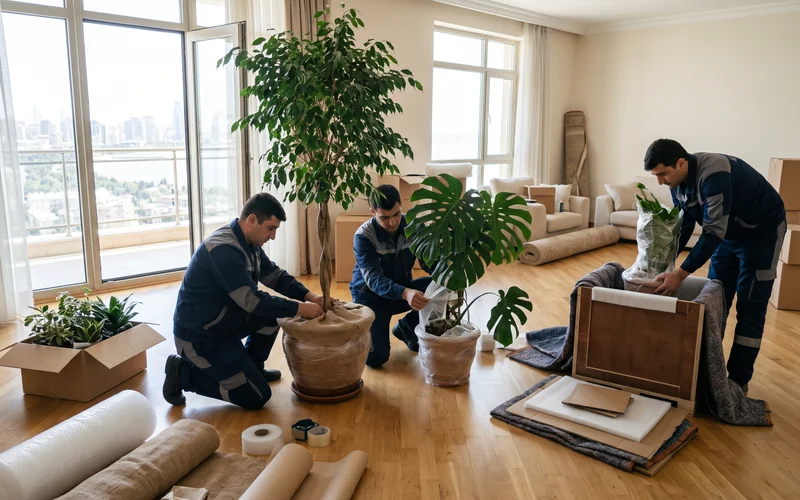
To keep potting mix from spilling across moving vans, the open top of each container must be securely sealed. Wrap plastic stretch film or protective polythene across the rim of the pot around the base of the stem, securing it firmly with painter tape. Alternatively, cut a circular piece of rigid cardboard with a central slit, slide it over the stem, and tape it across the planter rim. This simple safeguard prevents soil displacement during sharp vehicle turns and sudden deceleration.
Pruning and securing delicate shoots
Perform light pruning a few days prior to moving by snipping dead foliage and overly leggy, brittle stems. This reduces the overall perimeter of large bushy plants and minimizes the chance of branches snapping while fitting inside protective cartons.
Essential packing supplies and botanical protective methods
When organizing houseplants moving and transport, selecting appropriate packing materials like bubble wrap and heavy-duty cartons is critical for physical protection. Using residential moving materials tailored to living flora ensures zero damage during transit:
- Bubble wrap rolls: Protect fragile ceramic, terracotta, and porcelain pots from chipping, cracking, and rapid thermal swings.
- Heavy-duty 5-ply cardboard boxes: Ideal for organizing multiple small and medium potted plants into rigid, upright configurations.
- Stretch film and cotton ties: Perfect for gathering spreading foliage safely without scarring tender bark or crushing leaves.
- Cushioning kraft paper and cardboard dividers: Fill interior carton voids to prevent plant pots from sliding into each other during transit.
Wrapping fragile planters with bubble wrap
Glazed ceramic and terracotta planters break easily when bumped. Wrap each pot body with at least two layers of heavy bubble wrap, securing the perimeter with packing tape. During cold or windy weather, this cushioned layer also acts as an insulation shield, preventing root balls from freezing on the walkway.
Tying and protecting tall indoor trees and monsteras
Mature indoor trees like weeping figs, monsteras, dracaenas, and indoor palms require gentle crown management. Carefully draw outer branches inward and upward toward the central trunk using wide fabric ribbons or soft cotton twine. Never use thin wire or abrasive nylon strings, as they easily slice through tender plant tissue. Once gathered, encase the entire plant in breathable kraft paper sleeves or horticultural fleece.
Safe lifting, stairs navigation, and apartment egress
Navigating Baku residential buildings during houseplants moving and transport requires careful maneuvering through stairwells and freight elevators. Hasty carrying through narrow entryways is a primary reason main stems snap during household relocations.
Staircase handling versus freight elevator usage
Modern high-rises in Baku equipped with spacious freight elevators allow effortless transfer of tall potted trees. However, older apartment blocks without elevators require careful manual stair navigation. Two professional movers should support heavy planters simultaneously—one holding the base and the other guiding the crown. When descending stairs, the heavy pot should always lead forward while the foliage tilts safely upward away from banisters and rough walls.
Moving straps for massive planters
Oversized ceramic pots containing mature indoor trees often weigh between 40 and 80 kilograms. Lifting such substantial loads by hand strains the lower back and increases dropping risks. Skilled moving porters utilize ergonomic lifting straps slipped underneath the planter base, transferring the weight smoothly to shoulder harnesses.
Securing plants inside the moving vehicle and climate control
Inside the cargo van, houseplants moving and transport must always be conducted with plants secured vertically using tie-down straps. Never lay large potted trees flat on their sides or stack boxes containing heavy household belongings on top of them.
Vertical placement and van securing rules
Boxes holding grouped small plants should be placed snugly against the front bulkhead behind the driver cabin, where vehicular motion is smoothest. Tall freestanding pots must be secured flush against side walls using soft logistics straps. Laying non-slip rubber mats or thick corrugated cardboard under pots absorbs road vibrations and prevents slipping.
Guarding against Baku winds, summer heat, and winter chills
Transporting plants in open trucks or pickup beds is completely unacceptable: high-velocity wind tears foliage and fatally dehydrates green leaves within minutes. During winter moves, ensure cargo vans are pre-heated, while summer moves require shade, adequate ventilation, and rapid transit away from scorching direct sunlight.
Post-move settling and plant recovery guidelines
Once arrived at your new home, indoor plants need a gentle acclimatization period to recover from the sensory stress of moving.
- Gradual unpacking: Allow potted plants to sit inside their protective wrapping for an hour or two indoors to equilibrate temperature before unwrapping.
- Gentle indirect light: Place plants in bright, indirect light rather than scorching direct sun or cold air conditioning drafts.
- Moderate hydration: Avoid soaking the soil immediately; provide a light drink of room-temperature water once the plant rests for a day.
- Postpone fertilizing: Hold off on plant fertilizers for 3 to 4 weeks, allowing stressed roots to heal before absorbing concentrated nutrients.
Frequently Asked Questions
How do you protect indoor plants when moving during winter?
In cold weather, insulate pots and foliage thoroughly with several layers of newspaper, bubble wrap, or fleece. Minimize outdoor exposure by loading directly into a pre-warmed closed cargo van.
Can large potted trees be transported lying down horizontally?
Horizontal transport is generally discouraged because trunks can fracture under their own weight. If vertical clearance is insufficient, tilt the plant at an angle supported by soft foam bolsters and blankets.
How are plant moving costs calculated?
Pricing is determined transparently based on planter quantity and weight, floor level, availability of a freight elevator, and overall transport distance.
To protect your beloved indoor greenery from stress and foliage loss, safe houseplants moving and transport requires trusted logistical care. For skilled porters, specialized packing supplies, and climate-conscious moving vans across Baku, book your relocation directly with Yuk.az.
Related service: Home moving — to get a price, call 050 209 62 99.

Related posts
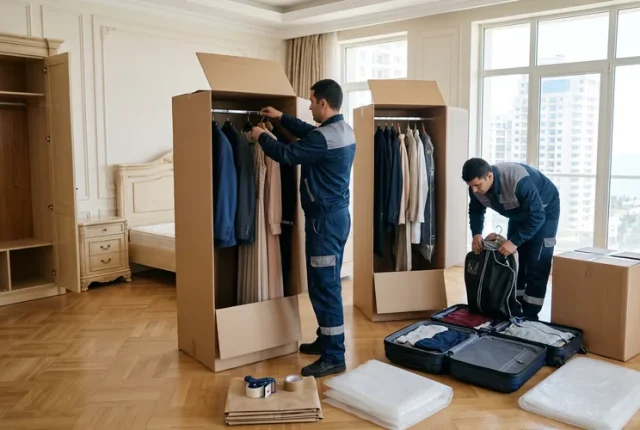
Clothes and personal effects moving: Wardrobe Box Packing Guide
Clothes and personal effects moving is often one of the most time-consuming and

Bina köçürülməsi: Safe and Fast Building Relocation
In today’s rapidly changing and highly competitive business world, the continu

Professional City Cargo Transportation in Baku
If you are looking for fast and reliable şəhərdaxili yükdaşıma services in

Leave a Reply