

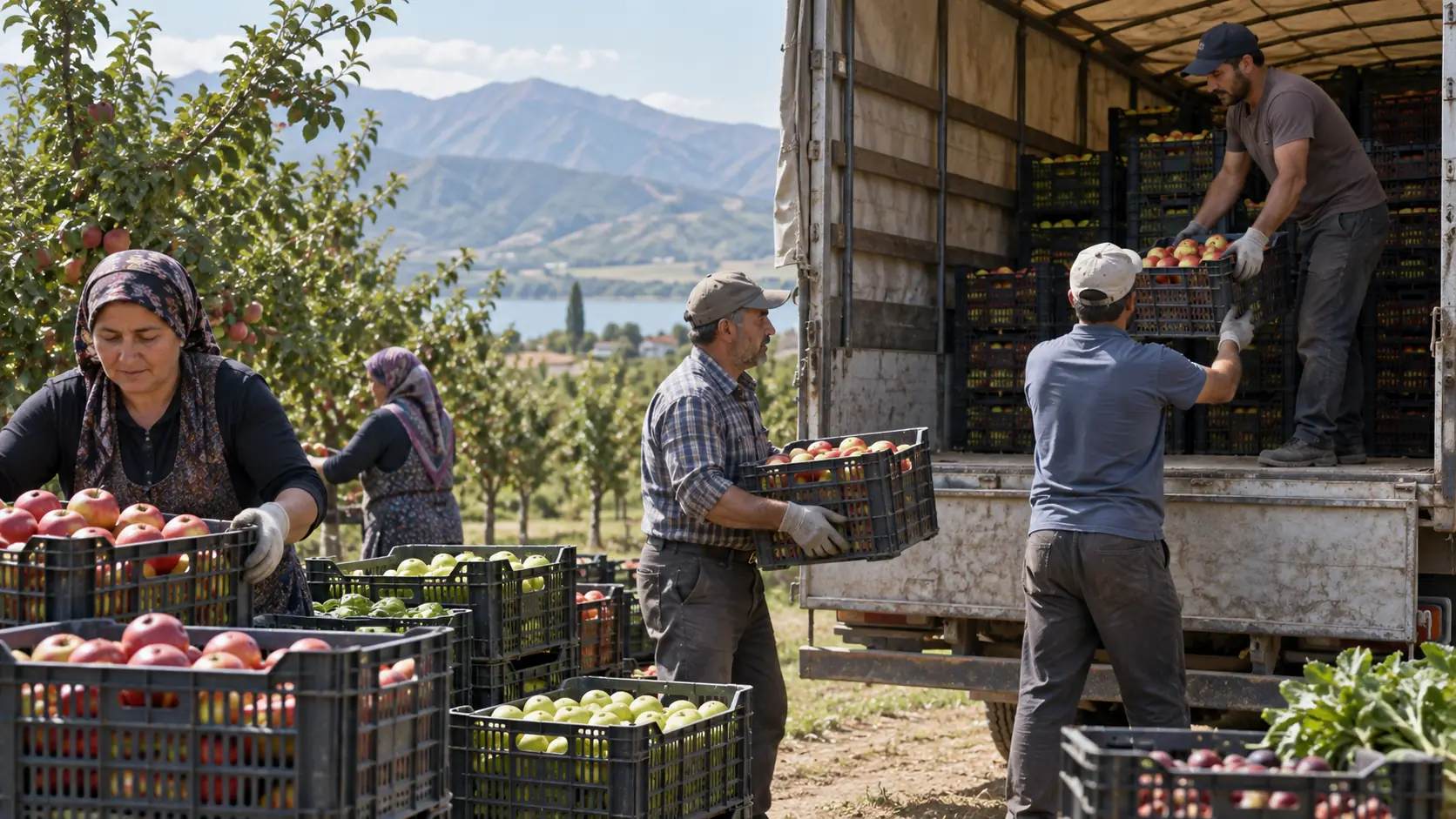
Agricultural cargo transport with less product loss
Agricultural cargo transport calls for different handling plans for different products. Fruit and vegetables may bruise, some goods are sensitive to heat or moisture, and packaged produce can suffer when cartons are stacked badly. To reduce avoidable losses, plan harvest timing, sorting, packing, vehicle choice and handover as one connected process. The following steps help organize a shipment from a farm to a warehouse, market or shop.
Agricultural cargo transport begins with an item list
Record the product name and batch, the number of cartons or pallets, total weight and package dimensions. Tell the carrier when the goods will be harvested and ready for collection. If different products share a vehicle, check whether their temperature, moisture and neighboring-load requirements are compatible. Add the receiver’s opening hours and unloading arrangements. Identify who will sign the delivery note and where the truck can stop. Our seven booking details provide a useful general checklist.
Sort and pack before collection
Separate visibly damaged or overripe products from the main shipment. Use boxes with sound bases and ventilation that suits the goods. Set stacking height according to the product’s characteristics and the packaging maker’s guidance. Heavier boxes generally belong lower, with lighter and more fragile goods above where this arrangement is suitable. Keep a readable label on each package showing its product, batch and destination. Our fragile packing guide explains broad protection principles; product-specific food handling instructions should guide the final choice.
Choose the vehicle and loading layout
Vehicle choice involves total weight, pallet dimensions, loading equipment and the space needed between groups of goods. Boxes should not shift freely on the journey or place too much pressure on products below them. Ask whether a forklift, pallet jack or manual loading will be used at collection and delivery. Check vehicle access to the farm or warehouse as well. A narrow road or soft surface may change where the truck can stop. The truck size and weight guide covers the main measurements to gather.
Set temperature and timing from the product needs
If the shipment requires a particular temperature range, the product owner should supply it from labeling and manufacturer guidance. Do not assume that every agricultural product needs refrigeration, or that a standard vehicle always suits it. Agree on a collection and receiving window so packed goods do not wait unnecessarily at an open loading bay. For several receivers, place batches in unloading order. Our refrigerated cargo guide explains the questions to ask when a controlled environment is required.
Plan the route from farm to market
For a longer journey, match departure time, possible stops and the receiver’s opening hours. Give the carrier the precise collection address, a note on access roads and the contact number of the person releasing the load. When empty space remains in the cargo area, agree on a way to keep cartons and pallets in place. Label each farmer’s batch separately if goods are collected from more than one source. Read our regional transport guide for more on securing a load during a long route.
Check receipt and document losses
The receiver should compare carton and pallet counts with the delivery papers. If boxes are crushed, packaging has opened or products are visibly damaged, take photographs and record the issue during handover. Check labels so batches are not mixed. Pass on any delivery-time or temperature records agreed for the order. Our article about documenting damage gives a more detailed handover process. For repeat shipments, keep notes on actual journey times and the condition of packaging.
A checklist before booking
- List the products, batches, quantities, dimensions and weight.
- Sort the goods and check labels on every carton.
- Confirm the vehicle, loading method and access road.
- Share written temperature instructions when relevant.
- Confirm the route and the receiver’s opening hours.
- Name contacts and prepare handover documents.
Ask the receiving site where goods will be unloaded: directly into storage or into a sorting area. Agree on the return of empty containers and pallets if needed. When comparing prices, check whether waiting, extra stops, loading and unloading are included. On a recurring route, record how long each stage actually takes. If one product group repeatedly arrives damaged, review its position and packaging on the next trip. With a clear product list, contact Yuk.az to discuss the route.
Frequently asked questions
Does every agricultural product need a refrigerated truck?
No. The choice depends on the specific product and its storage instructions.
Can all boxes be stacked to the same height?
The safe arrangement depends on product weight, package strength and the relevant handling instructions.
What if goods are visibly damaged at delivery?
Photograph the issue, note it on the delivery papers and inform the carrier and product owner promptly.
Related service: Moving and cargo services — to get a price, call 050 209 62 99.

Related posts

Ofis Köçürmə Services: Fast and Secure Office Relocation
What is Ofis Köçürmə and Why Rely on Professionals? Every growing company ne
City Freight Transportation Services in Baku Today
Looking for reliable city freight transportation services in Baku? You are in th
Cargo Transportation in Khachmaz: Baku–Khachmaz Moving
Cargo transportation in Khachmaz is in steady demand all year round: families mo

Leave a Reply