

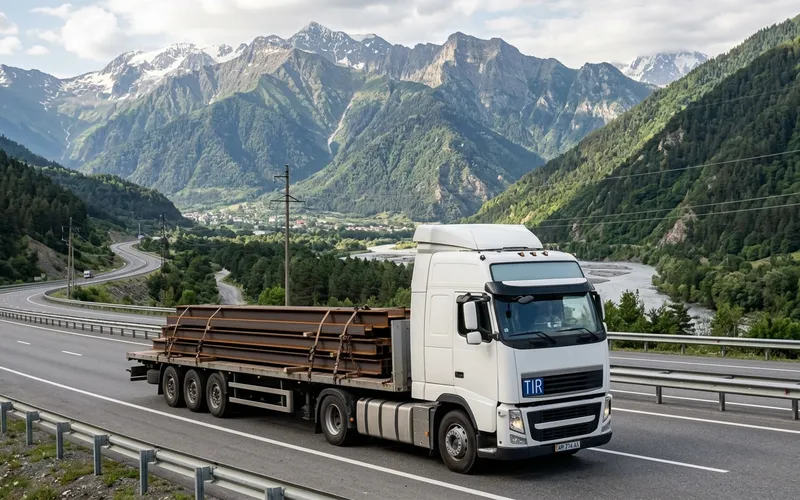
Flatbed trailer cargo transportation: guide and advantages
Flatbed trailer cargo transportation plays an essential role in contemporary freight logistics by offering unmatched capability for hauling heavy, oversized, and bulky industrial materials. Designed with a completely flat and un-enclosed deck without fixed side walls or a permanent roof, these semi-trailers allow full loading freedom from top and sides. Shippers in construction, manufacturing, energy, and infrastructure rely on flatbeds to keep global supply chains agile and responsive.
Technical Specifications in Flatbed Trailer Cargo Transportation
A flatbed semi-trailer combines a heavy-duty structural steel chassis with an open deck platform engineered to mate seamlessly with highway prime movers. Authoritative technical reviews on flatbed transport equipment highlight how open chassis layouts withstand intense concentrated structural loads without compromise.
Standard Dimensions and Payload Capacity
A standard international flatbed semi-trailer measures 13.6 meters (45 to 48 feet) in deck length and 2.45 to 2.55 meters in width. Deck height above ground level typically ranges between 1.3 and 1.5 meters, providing generous clearance underneath highway bridges. Within standard road axle regulations, modern tri-axle configurations deliver a net payload capacity ranging from 24 to 28 metric tons.
Chassis Construction, Axles, and Decking Materials
The main structural beams are fabricated from high-tensile steel designed to absorb dynamic stress across diverse terrains. Premium running gears from manufacturers such as SAF and BPW feature heavy-duty air suspension systems that protect cargo from road shocks. Flooring consists of 30 mm weather-resistant hardwood plywood or textured steel tread plates that provide essential friction for heavy machinery.
Primary Cargo Categories Suitable for Flatbed Trailers
Because open platforms eliminate rigid enclosure walls, shippers can haul items that cannot pass through the rear doors of standard box or curtain-sided trailers. Professional flatbed trailer cargo transportation ensures seamless supply for complex industrial operations across all major economic sectors.
Structural Steel, Pipes, and Precast Concrete
Rebar bundles, structural I-beams, long steel casing pipes, bridge girders, and precast concrete wall panels are inherently designed for flatbed logistics. Flat platforms allow cranes to distribute long items evenly across the chassis, balancing axle loads efficiently.
Heavy Industrial Machinery and Construction Equipment
Electrical transformers, high-capacity diesel generators, factory presses, and modular mechanical units travel securely on open flatbeds. Furthermore, wheeled civil engineering machines such as compact loaders, backhoes, and tractors are regularly transported between job sites.
Oversized and Non-Standard Project Freight
Modular cabins, industrial pressure vessels, agricultural silos, and wind energy components often extend beyond standard vehicle envelopes. Flatbed trailers accommodate controlled overhangs using appropriate safety markings, wide-load banners, and flashing warning beacons.
Loading Advantages and Cargo Securement Standards
Cargo securement on an open deck is subject to stringent safety engineering to prevent shifts, tipping, or loss of equilibrium during transit.
Versatile Crane and Multi-Directional Loading Operations
The primary advantage of flatbed design is unobstructed 360-degree crane and forklift access. Mobile cranes, overhead gantries, and industrial forklifts can approach the trailer from either side, above, or behind. This accessibility reduces turnaround times at busy freight terminals from several hours to less than 60 minutes.
Tie-Down Straps, Chains, Tensioners, and Stake Pockets
Adherence to EN 12195 securement standards guarantees cargo stability throughout long-haul transit journeys:
- Heavy-duty polyester ratchet tie-down straps rated for tensile strengths exceeding 5000 daN;
- Grade 70 and Grade 80 transport chains equipped with ratchet load binders for dense metal cargo;
- Removable perimeter steel stakes inserted into chassis stake pockets to contain stacked pipes and timbers;
- Anti-slip rubber friction mats placed under cargo bases to dramatically enhance sliding resistance.
Strategic Role of Flatbeds in Azerbaijani Freight Corridors
Azerbaijan serves as a pivotal logistics hub bridging Europe and Asia across the TRACECA and International North-South Transport Corridors. Utilizing professional flatbed trailer cargo transportation empowers regional connectivity and rapid industrial growth.
Transit Gateways Connecting Baku, Sumgayit, and Alyat Port
Baku International Sea Trade Port at Alyat processes massive volumes of Caspian Sea transit machinery destined for inland transit via flatbed trucks. Heavy manufacturing centers in Sumgayit depend on these platforms to receive raw metal billets and dispatch finished industrial products.
Highway Corridors and Regional Infrastructure Projects
Key arterial highways including the M1 (Baku-Guba-Russia border), M2 (Baku-Ganja-Georgia border), and M3 (Alyat-Astara-Iran border) carry heavy flatbed traffic every day. In addition, ongoing redevelopment across Karabakh and Eastern Zangezur relies heavily on flatbed trailers carrying bridge beams, utility poles, and pipeline networks.
Cost Calculation Factors and Booking Process
Flatbed shipping rates are determined on a tailored project basis rather than artificial fixed estimates. Essential rate drivers include total haul distance, gross cargo weight, dimensional overhang, crane coordination, and seasonal corridor demand. This transparent methodology ensures commercial shippers receive competitive and realistic logistics pricing.
For organized, verified, and safe transportation across Azerbaijan and neighboring territories, business shippers turn to Yuk.az. The digital freight platform matches your cargo specifications directly with certified carriers operating roadworthy flatbed equipment.
Frequently Asked Questions
What is the maximum payload capacity of a standard flatbed trailer?
A standard three-axle flatbed trailer typically supports legal payloads between 24 and 28 metric tons, subject to gross vehicle weight limits and local axle distribution regulations.
How is cargo protected from environmental conditions on an open flatbed?
Weather-sensitive equipment transported on open decks is carefully wrapped in industrial shrink wrap or covered with heavy-duty waterproof tarpaulins secured by reinforced elastic cords and tie-downs.
Are special permits required for oversized flatbed transport?
Yes. If cargo dimensions exceed 2.55 meters in width, 4.0 meters in total vehicle height, or 20 meters in total vehicle combination length, special transit permits and escort vehicles are legally mandatory.
What information is required to order flatbed transport services?
Shippers must specify accurate piece dimensions, weight, loading points, site crane capabilities, and any specific packaging details to ensure appropriate trailer selection and secure transit.
Investing in reliable flatbed trailer cargo transportation guarantees that your high-value industrial equipment arrives safely and on schedule at its project destination.
Related service: Moving belongings — to get a price, call 050 209 62 99.

Related posts

Cargo transportation in Saatli: reliable moving services
Reliable cargo transportation in Saatli is essential whether you are relocating
TIR cargo transportation in Fuzuli: heavy freight and logistics
TIR cargo transportation in Fuzuli serves as a vital logistics backbone for ongo

TIR cargo transportation in Lokbatan: logistics and trade hubs
Professional TIR cargo transportation in Lokbatan serves as a vital arterial lin

Leave a Reply