

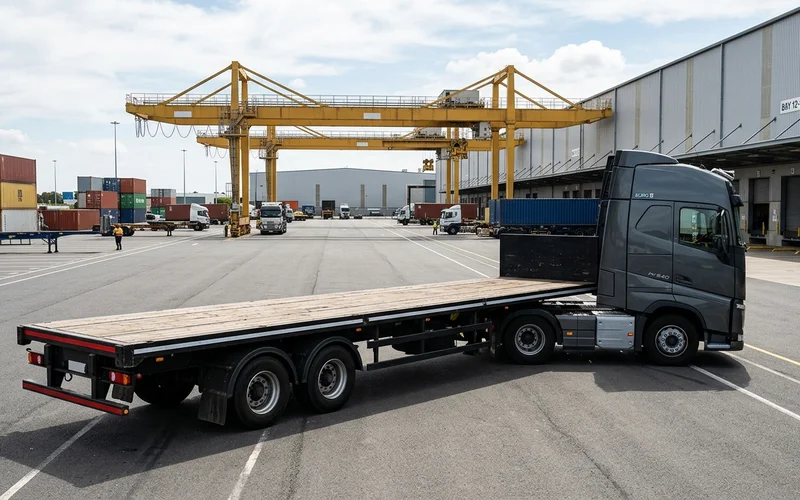
Long Flatbed Trailer Freight Transport: Safe Heavy Cargo Haulage
Long flatbed trailer freight transport is an essential logistics solution for moving heavy, bulky, and elongated cargo across industrial, energy, and infrastructure projects. Featuring an open deck with drop-down sides or a completely flat platform, this vehicle allows rapid overhead and side crane loading, significantly streamlining handling operations at construction sites and warehouse terminals.
Technical Specifications and Structure of Long Flatbed Trailers
In freight transportation, a shalandra or long flatbed trailer refers to an open articulated semi-trailer measuring between 12.0 and 13.6 meters in length. Built on high-tensile steel chassis, these units are specifically engineered to accommodate oversized industrial products that cannot fit into standard enclosed dry vans or curtain-sided trailers.
Deck Dimensions and Payload Capacity
A standard flatbed platform boasts an internal length of 13.6 meters and a width of 2.45 to 2.50 meters. This generous footprint easily accommodates standard 12-meter steel rebars, long piping spools, prefabricated concrete bridge beams, or heavy industrial machinery. Depending on tractor unit configurations and axle ratings, payload capacity typically ranges from 20 to 25 tons, with heavy-duty multi-axle models supporting up to 28–30 tons.
Drop Sides and Removable Stanchions (Pipe Stakes)
The perimeter is typically enclosed by lightweight aluminum or steel sideboards measuring 0.6 to 0.8 meters high. When transporting wide machinery or side-loaded pallets, these sideboards can be dropped down or completely removed. Furthermore, for rolling cargo like large pipes and timber logs, vertical removable stanchions are inserted into side pockets to prevent load displacement during highway transit.
- Platform deck length: 12.0 – 13.6 meters
- Usable flatbed deck width: 2.45 – 2.50 meters
- Drop sideboard height: 0.6 – 1.0 meter (hinged and detachable)
- Effective payload capacity: 20 – 26 metric tons
- Cargo securing gear: Heavy-duty ratchet tie-down straps, grade 80 transport chains, corner protectors, and pipe stakes
Key Advantages of Long Flatbed Trailer Freight Transport
Unlike boxed semi-trailers with limited rear-door clearance, long flatbed trailer freight transport provides complete 360-degree accessibility. This structural freedom simplifies material handling and unlocks superior operational flexibility for heavy industrial shippers.
Unobstructed Top and Side Crane Loading
Moving multi-ton precast slabs or long structural steel girders through trailer doors is practically impossible. A flatbed trailer allows overhead gantry cranes, boom trucks, and mobile cranes to lower the load directly onto the deck with utmost safety and precision.
Substantial Time and Labor Savings
Direct crane access eliminates the complicated maneuvering required when sliding heavy items into enclosed cargo boxes. What could otherwise take several hours of manual rigging is completed within 30 to 45 minutes, dramatically lowering dwell times and boosting overall fleet productivity.
Accommodating Oversized Geometries
When cargo dimensions slightly exceed normal trailer parameters, an open flatbed platform with folded sides offers the versatility needed to transport wide freight safely, provided statutory transit permits and safety signage are in place.
Common Cargo Types Carried by Flatbed Trailers
In construction and energy sectors, long flatbed trailer freight transport delivers unmatched efficiency for robust commodities that do not require climate-controlled environments during transit.
Structural Steel, Rebars, and Metal Billets
Steel mills and processing facilities in Baku and Sumgayit regularly dispatch 12-meter reinforced bars, H-beams, and sheet metal packs. Flatbeds provide the ideal platform, secured with cross-deck chain binders and tensioners.
Precast Concrete Slabs and Architectural Beams
Civil engineering contractors rely on flatbeds to haul massive precast concrete panels, bridge pilings, and culverts from casting yards to job sites, cushioned by heavy timber dunnage to prevent transit cracking.
Industrial Machinery and Oilfield Tubulars
Drill pipes, casing pipes, pumps, compressors, and skid-mounted petroleum equipment destined for Sangachal or Garadagh coastal hubs are securely lashed to flatbed anchor points using rated chains and friction mats.
Logistical Corridors and Flatbed Operations in Azerbaijan
Across Azerbaijan, when planning long flatbed trailer freight transport, cargo handlers rely on arterial highway corridors such as the M1, M2, and M3 to move freight between production hubs and construction zones. Key economic zones in Sumgayit Chemical Industrial Park, Garadagh, Ganja, and Mingachevir generate steady demand for open flatbed equipment.
Transit Cargo via Alyat Port and Free Trade Zone
The Port of Alyat serves as a central multimodal crossroads where bulk industrial supplies and containerized machinery arrive by sea and rail before being transferred onto long flatbed trailers for on-carriage to regional destinations.
Safety Standards and Cargo Lashing Compliance
Open deck hauling demands rigorous tie-down discipline. Drivers inspect strap tensioners every 100 kilometers, install edge protectors to prevent strap abrasion, and verify balanced axle load distribution to guarantee highway safety.
Pricing Factors for Flatbed Freight Services
Calculating the cost of long flatbed trailer freight transport depends on multiple logistical factors rather than arbitrary flat estimates. Transparent carrier billing reflects real-world operational variables to guarantee high-value performance.
Haulage Distance and Terrain Conditions
Urban delivery, intercity highway hauling, and challenging mountainous access routes incur differing fuel consumption rates and transit times, influencing final quotes.
Payload Weight, Equipment Specs, and Waiting Times
Trips requiring heavy three-axle tractors, specialized stanchions, or prolonged crane standby times will adjust the overall logistics budget. To calculate precise shipping rates and connect with certified fleet operators, visit Yuk.az for an immediate freight estimate.
Frequently Asked Questions
What is the maximum cargo length accommodated on a standard flatbed?
The standard trailer bed is 13.6 meters long. With appropriate warning flags and lighting, minor rear overhangs of 1 to 2 meters are permitted under local road regulations for rigid, indivisible loads.
Can weather-sensitive cargo be protected on an open flatbed?
Yes, if goods require shielding from rain or direct sunlight, cargo crews securely cover the entire loaded deck with heavy-duty waterproof tarpaulins and tie them down prior to departure.
Is a crane mandatory for unloading flatbed trailers?
For heavy industrial beams, pipes, and machinery, on-site cranes or heavy forklifts are required, as multi-ton items cannot be handled manually.
How can I book a long flatbed trailer for industrial cargo?
Submit your cargo dimensions, weight, loading date, and origin-destination details through professional freight platforms to secure the right vehicle with an experienced driver.
For dependable and cost-efficient long flatbed trailer freight transport, modern logistics operators rely on verified flatbed fleets that ensure timely project execution and strict cargo protection from origin to destination.
Related service: Special cargo transport — to get a price, call 050 209 62 99.

Related posts

Piano Transportation: Professional and Safe Service
Piano transportation is always a complex process that requires special attention

Cargo transportation in Kangarli: fast truck services
When organizing residential relocations, farming shipments, or commercial delive

Cargo transportation in Agjabadi: moving and furniture
Reliable cargo transportation in Agjabadi is an indispensable service for famili

Leave a Reply