

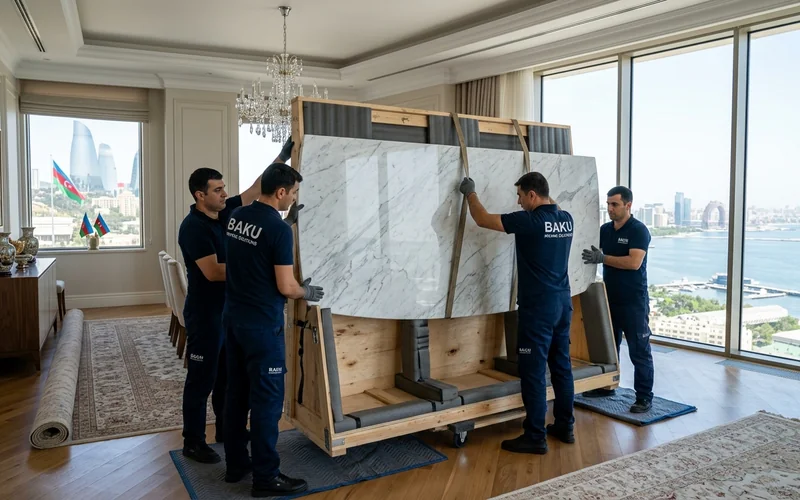
Marble table and stone furniture moving: crack prevention guide
Marble table and stone furniture moving represents one of the most technically demanding aspects of residential relocation, requiring specialized engineering know-how, serious physical endurance, and professional rigging gear. Natural stone varieties—including marble, granite, travertine, and onyx—project an aura of indestructible solidity, yet their crystalline internal architecture makes them exceptionally brittle and intolerant of tensile deformation. While natural stone boasts tremendous compressive strength, its resistance to bending moments and shear stress is remarkably low. When amateur movers attempt to shift a heavy dining table horizontally, the slab’s immense dead weight creates catastrophic flexural stress across natural fault lines, resulting in snapped tabletops, sheared corners, or irreparable structural fractures. Mitigating these hazards necessitates a disciplined protocol grounded in physics and proven moving techniques.
Planning and Engineering in Marble Table and Stone Furniture Moving
Before any physical lifting occurs, every dimensional parameter, structural connection, and transit pathway must be meticulously evaluated. Rushing into the handling of massive architectural stone creates immediate safety risks for property and personnel alike.
Physical Properties of Natural Stone and Weight Dynamics
Natural stone furniture pieces possess a weight profile far exceeding conventional timber furnishings. A standard polished slab of 20 to 30 millimeters in thickness weighs between 60 and 85 kilograms per square meter, with dense granites occasionally climbing higher. A grand dining table tailored for eight to ten guests routinely features a top weighing from 150 to upwards of 250 kilograms. Compounding this challenge, natural stone is veined with geological fissures and crystalline inclusions. Subjecting a horizontal slab to road vibrations or torque immediately triggers crack propagation along these inherent fault lines.
Detaching the Slab from Pedestals and Frames
Under no circumstances should a natural stone table be transported with its top attached to its base pedestals or legs. The tremendous momentum generated by the shifting slab during movement places extreme localized leverage on mounting brackets, stripping fastener threads and cracking the stone around anchor points. Professional rigging crews carefully unbolt mechanical fasteners, sever flexible silicone adhesives using specialized non-marring tools, and isolate the slab from the base. The base structure and stone slab are subsequently processed as independent freight items.
Access Route Inspection and Interior Safeguards
The egress path from the staging room to the transport vehicle must be completely cleared and secured. Hardwood, marble, and engineered floors are blanketed with heavy corrugated sheets and thick floor protection runners to prevent gouging under heavy footprint pressures. Door casings and hallway wall corners are fitted with shock-absorbing foam corner protectors to shield residential finishes from accidental contact during transit.
Protective Packaging and Rigid Wooden Crating
A multi-tiered packaging strategy shields polished surfaces against cosmetic abrasion while safeguarding brittle edges against direct impact. Because calcium-carbonate-based stone is naturally porous, chemical compatibility of packing materials is paramount.
Dense Felt Padding and Surface Protection
Applying standard plastic adhesive tape directly to polished stone surfaces must strictly be avoided. Adhesive chemicals seep into the micro-pores of natural stone, producing stubborn chemical stains requiring intensive mechanical repolishing. Instead, the entire slab is cocooned in premium high-density felt padding or quilted non-woven moving blankets. This breathable layer prevents abrasion, isolates the stone from ambient friction, and protects delicate mirror polishes.
Multi-Layer Bubble Cushioning and Corner Buffers
Over the primary felt barrier, technicians apply three to four continuous layers of heavy-duty bubble wrap to absorb vibration and distribute incidental impacts. Chamfered edges and fragile beveled corners are fortified with dense compressed foam or heavy-duty cardboard edge protectors, all locked firmly in place with industrial stretch wrap.
Custom Wooden Crating for Maximum Rigidity
For oversized dining tables, valuable veined marbles, and fragile onyx surfaces, building an engineered custom wooden crate is mandatory. Built from sturdy timber framing and rigid plywood sheathing, this custom container prevents the stone from flexing during transport. Dense interior foam blocks and rubber cushions secure the slab snugly inside the crate, preventing any internal movement.
Rigging Mechanics and Vertical Transport Techniques
Understanding structural dynamics is essential when handling geological materials. In nature, natural marble withstands tremendous tectonic pressure, yet in a flat format, it retains tensile resilience strictly when maintained in a vertical orientation.
The Fundamental Rule: Always Carry on Edge
Carrying a heavy stone tabletop flat is the single most common and costly mistake in residential moving. Supported horizontally, the unsupported span between carrying points sags under gravity, generating extreme tensile forces across the lower surface that snap the stone in two. Moving personnel must carry stone slabs strictly on edge (vertically). In this orientation, the structural depth of the entire slab resists bending forces, eliminating the danger of fracture.
Industrial Suction Cups and Heavy-Duty Lifting Straps
Handling heavy polished slabs with bare hands introduces unacceptable slipping hazards. Certified moving technicians deploy heavy-duty glass and stone vacuum suction cups featuring integrated pressure gauges. Combined with ergonomic shoulder lifting straps, this gear transfers the physical load across the skeleton while keeping hands free to maneuver smoothly through tight architectural spaces.
Essential Specialized Moving Equipment Checklist
- Heavy-duty vacuum suction cups with vacuum loss indicator gauges
- Dense technical felt padding and heavy-gauge multi-layer bubble wrap
- Custom-fabricated timber crates engineered with internal dampeners
- Rigid composite edge protectors and high-tensile stretch wrapping film
- Ergonomic shoulder-mounted moving harnesses and grip-enhancing gloves
- Heavy-capacity transport dollies equipped with non-marking rubber wheels
Baku Building Realities and Cargo Securing Protocols
When executing professional marble table and stone furniture moving across Baku’s diverse architectural landscape, managing heavy stone furniture requires tailored logistics. Older residential buildings—including Soviet-era Khrushchev and Leningrad designs—feature narrow, winding staircases without elevator access, demanding pinpoint team coordination during descent. In contemporary new construction towers (novostroyka), cargo elevators offer convenience, though cab depth and payload capacity must be verified beforehand.
Navigating Stairwells and Cargo Elevators
When elevator height cannot accommodate the slab’s vertical dimension, manual staircase transit becomes necessary. Moving crews descend slowly and steadily, maintaining uniform rhythm across stair flights. Two lead movers control the slab via suction cups and harness straps, while secondary spotters ensure ample clearance from handrails, light fixtures, and perimeter walls.
A-Frame Mounting and Ratchet Strap Restraint
Inside the transport vehicle, laying stone slabs flat on the cargo floor is entirely unacceptable. Trucks must be equipped with a heavy-duty wooden or steel A-frame transport rack (glass pyramid). The crated slab is leaned vertically against the A-frame over thick vibration-dampening rubber pads and secured using high-capacity ratchet tie-down straps. This rigid restraint system prevents shifting or bouncing when navigating city streets and sudden traffic decelerations.
Reassembly at the Destination and Service Pricing Factors
Following arrival at the new residence, uncrating and precision reassembly take place. Establishing a stable foundation is essential for preventing future stone fractures.
Subfloor Leveling and Silicone Isolation Pads
If the subfloor at the destination is uneven, table legs bear unequal weight, transferring torsional stress up into the stone slab. Movers utilize precision levels to adjust leg levelers perfectly. Neutral-cure silicone bumper pads or high-density neoprene isolation strips are positioned between the structural base and the stone to absorb ambient vibrations and equalize load distribution.
Key Factors Influencing Relocation Quotes
Transparent pricing for high-value marble table and stone furniture moving depends on several concrete operational criteria:
- Slab dimensions, stone thickness, and total gross weight (marble, granite, quartzite)
- Fabrication requirements for specialized custom wooden crating
- Floor levels at both addresses and availability of operational freight elevators
- Transit distance, route condition, and number of certified riggers deployed
- Complexity of pedestal disassembly and precision leveling upon delivery
When selecting professional Yuk.az moving solutions, you gain access to vetted moving crews, specialized crating equipment, and fully equipped transport trucks that safeguard your luxury furnishings throughout the entire relocation process.
Frequently Asked Questions
Can a marble tabletop ever be transported flat on its side?
No, carrying or transporting a natural stone slab flat is completely prohibited. When laid horizontally, dynamic transit vibrations and gravity induce severe flexural stress, causing the slab to snap across its center. Stone slabs must always travel vertically on edge secured to an A-frame.
How many specialists are required for marble table and stone furniture moving?
A standard residential marble table typically requires three to four trained movers equipped with suction cups and harnesses. For grand banquet tables or stone slabs exceeding 180 kilograms, an experienced team of five to six rigging specialists is deployed to guarantee safety.
Does regular adhesive tape damage polished marble surfaces?
Yes, standard adhesive tape leaves chemical residue that penetrates deeply into the porous crystalline matrix of polished marble, creating unsightly stains that are difficult to eliminate. Only apply tape over protective blankets or non-adhesive felt wrappers.
How do movers protect natural stone veins from fracturing?
Movers shield fragile veins from cracking by totally eliminating bending torque. The stone is enclosed in a rigid custom wooden crate, cushioned with internal shock absorbers, and transported strictly on edge to keep stress forces purely compressive.
In summary, successful marble table and stone furniture moving demands unwavering precision, robust specialized crating, and well-coordinated teamwork. By partnering with certified relocation specialists who respect the physical nuances of natural stone, you protect your luxury investment and enjoy seamless delivery to your new home.
Related service: Moving belongings — to get a price, call 050 209 62 99.

Related posts

Cargo transportation in Saatli: reliable moving services
Reliable cargo transportation in Saatli is essential whether you are relocating

Professional Piano Moving Services in Azerbaijan
Professional piano moving services in Azerbaijan require exceptional care, preci

Regional cargo transport: securing loads for the road
Regional cargo transport keeps goods in the vehicle for a longer journey, so pac

Leave a Reply