

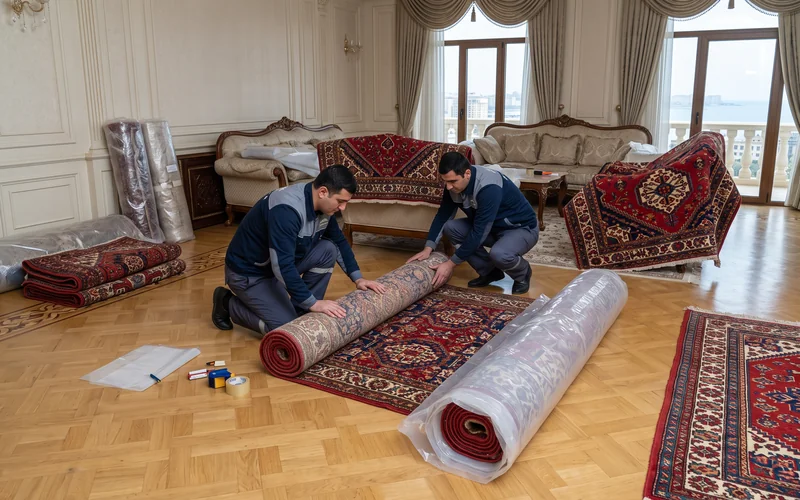
Carpet and rug transport: Expert packing and safe delivery
During residential relocation, delicate carpet and rug transport requires specialized care, proper rolling techniques, and durable protective packaging. Valuable wool floorings, delicate silk runners, and historical hand-woven Azerbaijani carpets are not simply decorative room elements; they represent exquisite family heirlooms and valuable artistic investments. Haphazard folding, exposure to damp weather, or compression under bulky furniture inside a cargo van can cause permanent structural deformities. In this comprehensive relocation guide, we explore the industry best practices for wrapping, securing, and safely moving carpets and rugs to your new residence.
Preparation and Initial Inspection: Vacuuming and Safety Assessment
Preparing valuable textile coverings should begin several days prior to scheduled moving day. Accumulated grit and dust hidden deep inside the carpet fibers act as abrasive sandpaper during handling, dulling colors and wearing down precious threads.
Thorough Vacuuming and Dryness Verification
Before rolling, thoroughly vacuum both the face pile and the reverse backing fabric using appropriate suction attachments. If the rug has recently undergone professional washing, ensure it is completely dry throughout its entire thickness. Rolling a slightly damp carpet inside protective plastic wraps inevitably promotes mold growth, mildew, and foul odors.
Evaluating Weave Structure and Securing Delicate Fringes
Antique oriental floor coverings differ fundamentally from machine-woven synthetic rugs in density and elasticity. Any authentic carpet features intricate fringe tassels that are especially prone to catching and fraying. Gently comb out the fringe tassels, fold them flat under the carpet backing, and secure them with protective acid-free paper.
Essential Packaging Supplies and Professional Wrapping Techniques
Flawless carpet and rug transport begins with choosing suitable protective wraps. Ordinary disposable trash bags or standard sticky tapes attached directly onto the pile will damage textile fibers and leave stubborn adhesive residues.
Breathable Kraft Paper and Non-Woven Textile Sleeves
For fine wool and hand-knotted silk pieces, heavy-duty brown kraft paper is the premier base layer. Kraft paper absorbs humidity fluctuations while allowing natural wool lanolin to breathe properly. For prolonged transit or temporary storage, breathable non-woven polypropylene fabric sleeves (spunbond) provide unparalleled preservation.
Heavy-Duty Bubble Wrap and Protective Stretch Film
To shield the shipment from inclement weather, rain, and grime during loading, seal the exterior using heavy bubble wrap and industrial stretch film. Crucially, apply packing tape only over the outer plastic sleeve layers without ever touching the delicate carpet fabric itself.
- Brown kraft paper or cotton sheets: Maintain breathability and prevent condensation buildup.
- High-density bubble wrap: Absorbs mechanical shock, friction, and transit abrasions.
- Industrial stretch film: Creates a waterproof and dustproof exterior protective barrier.
- Heavy strapping bands and packing tape: Hold the rolled bundle firmly compressed.
Essential Carpet and Rug Transport Standards: Rolling and Surface Safety
The single most destructive mistake homeowners make during moving is folding carpets like blankets. Folding ruptures the warp and weft foundation threads, creating deep permanent creases that cannot be eliminated.
Rolling Tightly with Pile Inward
Roll standard wool rugs tightly with the pile facing inward. This shields the visible decorative surface from external friction and protects delicate shearing patterns. For very fragile antique textiles or stiff backings, inserting a sturdy cardboard support tube into the center prevents excessive core bending.
Securing the Roll and Reinforcing Vulnerable End Caps
Once tightly rolled, fasten the cylinder with wide cloth straps or heavy twine in at least three intervals along its length. Because the exposed roll ends frequently encounter ground friction, cap both cylindrical ends with heavy cardboard discs and wrap them generously with stretch film.
Navigating Baku Staircases and Apartment Complex Logistics
Transporting long 3-to-5-meter carpet rolls across Baku residential districts requires practical foresight and coordinated physical teamwork.
Freight Elevators vs Narrow Soviet Stairwells
While contemporary high-rise towers in Baku feature spacious freight elevators accommodating vertical roll heights, older Soviet apartment blocks (such as Khrushchev or Stalin designs) lack elevator capacity. Maneuvering long rigid rolls through narrow stairwells demands two agile movers carrying the cylinder diagonally without bending it around sharp corners.
Professional Porter and Transport Assistance
Maneuvering heavy carpets weighing upwards of 30 to 50 kilograms single-handedly poses significant risk of back strain and dropped cargo. Booking vetted moving crews and tailored truck transportation via the Yuk.az platform guarantees smooth handling and seamless residential relocation.
Safe Cargo Loading and Secure Fastening in Transit
Inside moving vans, carpet and rug transport demands strict adherence to spatial arrangement and load balancing rules.
Flat Horizontal Placement on Clean Van Floors
Rolled carpets should be laid flat horizontally on a swept cargo floor lined with clean cardboard sheets or moving blankets. Never place heavy appliances, wardrobes, or jagged wooden crates on top of rolled rugs, as extreme pressure crushes internal fibers and causes irreversible indentation.
Tie-Down Strapping and Shift Prevention
To prevent rolling during vehicle deceleration and cornering, strap the rolls securely against interior van cargo rails using polyester ratchet straps. If placed atop smooth furniture surfaces, ensure they are anchored so they cannot slide or fall during transit.
Unrolling and Acclimatization in Your New Home
Upon arriving safely at your new destination, allow the carpet time to settle before setting heavy furnishings across it.
Removing Exterior Packaging and Airing Out
Remove plastic wrapping and stretch film immediately after delivery to let the fibers breathe. Allow the rug to lie unrolled at room temperature for several hours so that compressed fibers naturally relax into their authentic geometry.
Restoring Pile Texture and Installing Floor Protectors
Brushing gently in the natural direction of the pile restores fiber luster and volume. When positioning heavy dining tables, armchairs, or beds, install felt pads underneath all furniture legs to avoid deep permanent indentations.
Frequently Asked Questions
Can I fold a large rug in half for easier moving?
No, you should never fold a rug. Folding causes irreversible creasing and breaks the internal structural foundation threads. The only safe way to transport any carpet is by rolling it into a tight, uniform cylinder.
Why does handmade carpet and rug transport require breathable covers?
Natural wool and silk fibers contain moisture and natural oils that require air circulation. Enclosing them directly in airtight plastic for extended periods creates condensation, leading to musty odors and potential fiber mildew.
How is the price calculated for transporting carpets and rugs?
Relocation costs depend upon rug dimensions, total weight, building floor levels, the presence of freight elevators, and transit distances across Baku and the Absheron peninsula. Booking through professional networks ensures clear, transparent pricing.
In conclusion, safeguarding your cherished carpets and oriental rugs during a home move requires proper rolling technique, quality protective supplies, and meticulous handling. By partnering with seasoned relocation specialists and reliable cargo carriers, you can rest assured your valuable textiles arrive in flawless condition.
Related service: Special cargo transport — to get a price, call 050 209 62 99.

Related posts

Warehouse and distribution transport from order to store
Warehouse and distribution transport works when orders are picked accurately, ro

TIR cargo transportation in Khankendi: reliable haulage
Amid the comprehensive redevelopment of the Karabakh region, professional TIR ca

Professional Piano Moving Services in Azerbaijan
Professional piano moving services in Azerbaijan require exceptional care, preci

Leave a Reply