

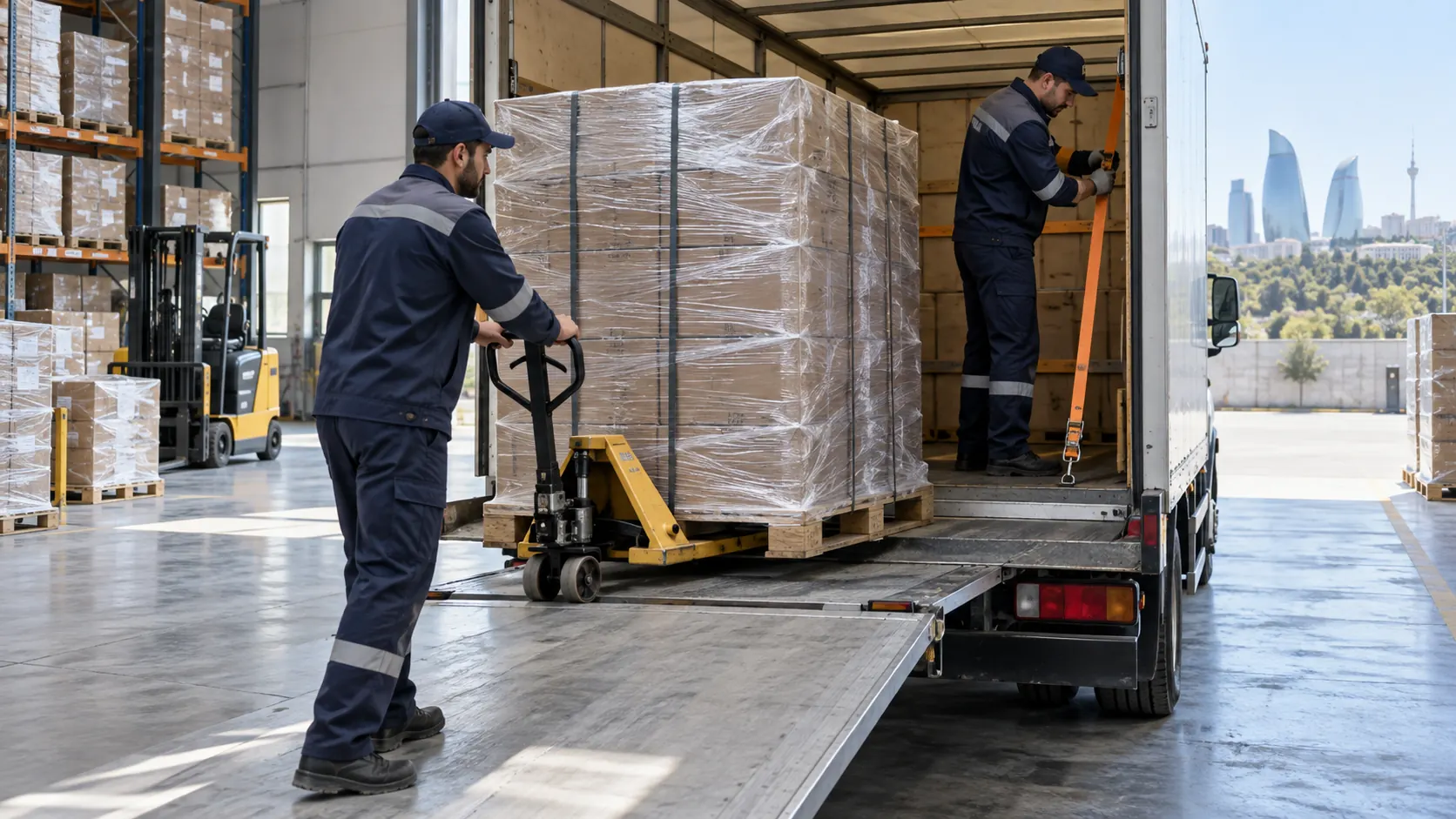
Pallet cargo transport and secure loading guide
Pallet cargo transport can make repeated deliveries between warehouses, shops and producers easier, but a pallet alone does not keep products safe. The size and condition of the base, the arrangement of cartons, total weight and available loading equipment all matter. Before booking, give the carrier a useful description of the load and both locations. This guide covers practical preparation, securing, delivery order and checks at handover.
Pallet cargo transport starts with measurements
Record the number of pallets and the length, width, height and approximate weight of each group. Point out unusually tall or heavy units instead of quoting only an overall count. Describe the goods: are they fragile, sensitive to moisture or unsuitable for stacking? Add the warehouse address, pickup window, loading gate and a contact person. For delivery to several locations, provide the order of stops. Our seven details to send before booking cargo transport give you a broader checklist.
Inspect the pallet and its packaging
Before loading, look for broken boards, damaged supports and a tilted base. A weak pallet may become unstable when moved. Place heavier cartons lower and lighter ones higher where the product allows it. Avoid boxes extending far beyond the edge, and check that loose items cannot slip out. Compare the number of cartons with the delivery document. Photographing the ready load can help both sender and receiver understand its condition when several suppliers are involved.
Choose a vehicle and loading method
Do not compare only the floor area of the truck with the footprint of the pallets. Leave room for positioning, securing and access during unloading. A tall pallet must pass through the vehicle opening, and the combined weight must suit the selected vehicle. Ask whether each site has a ramp, forklift or pallet jack. Without these, you may need more workers or a different loading plan. Our guide to calculating cargo size and weight can help you describe the job accurately.
Keep cartons and pallets from shifting
Cartons need to stay on their pallet, while the pallet itself needs to stay in place during the trip. Stretch wrap, corner protectors and suitable securing equipment should reflect the type of goods being carried. Do not rely on the appearance of wrap alone. Correct leaning stacks, open cartons and empty spaces before departure. When pallets have different heights, make sure one cannot press against fragile cartons on another. Inspect the condition of straps and anchor points. For longer routes, see our guide to securing loads on regional journeys.
Plan stops in unloading order
If a truck serves several stores, tell the carrier which pallet belongs to each stop. Pallets for the first delivery should be accessible without repeatedly moving the rest of the load. Label each unit with its address, product group and document number. Keep receiving contacts, opening hours and ramp access rules together. If a site may cause waiting time, discuss this while agreeing the service. A written plan makes the booking agreement more useful to everyone involved.
Check delivery and compare the full quote
At handover, compare pallet and carton counts with the delivery note. Look for torn wrap, crushed boxes and damaged boards. Photograph visible problems and record them on the documents while the load is being received. Our article on documenting cargo damage explains the next steps. When comparing prices, ask whether loading, unloading, waiting, extra stops and the return of empty pallets are included. A low transport rate may cover less work than another quote.
Checklist before dispatch
- Write down pallet counts, dimensions, heights and weights.
- Inspect the bases, wrap and arrangement of cartons.
- Confirm ramps and handling equipment at both ends.
- Agree on securing supplies and the number of workers.
- Send the stop order and receiver contact details.
- Confirm included services and handover documents.
For regular deliveries, keep notes from each journey. Record the actual pallet count, waiting time and any access difficulties. This helps you choose a suitable vehicle and delivery window next time. During busy periods, ask when each site accepts shipments and who signs the papers. Once your details are ready, contact Yuk.az and share pallet photos together with the route.
Frequently asked questions
Do pallet deliveries need extra workers?
That depends on weight, ramp access and handling equipment at both sites. Describe those conditions when requesting a quote.
Can different pallet sizes travel together?
Yes, when the layout, weight distribution and securing method are planned in advance.
What if damage is visible at delivery?
Photograph it, note it on the delivery documents and inform the carrier promptly.
Related service: Palletised cargo transport — to get a price, call 050 209 62 99.

Related posts

Cargo transportation in Saray: fast delivery and moves
Reliable and prompt cargo transportation in Saray is essential for residents, ho

Summer House Relocation: Safe and Efficient Moving Guide
What is a Professional Summer House Relocation? As the warm season approaches or
Professional Office Relocation Services in Baku – Yuk.az
In today’s dynamic business environment, company growth often leads to the

Leave a Reply